
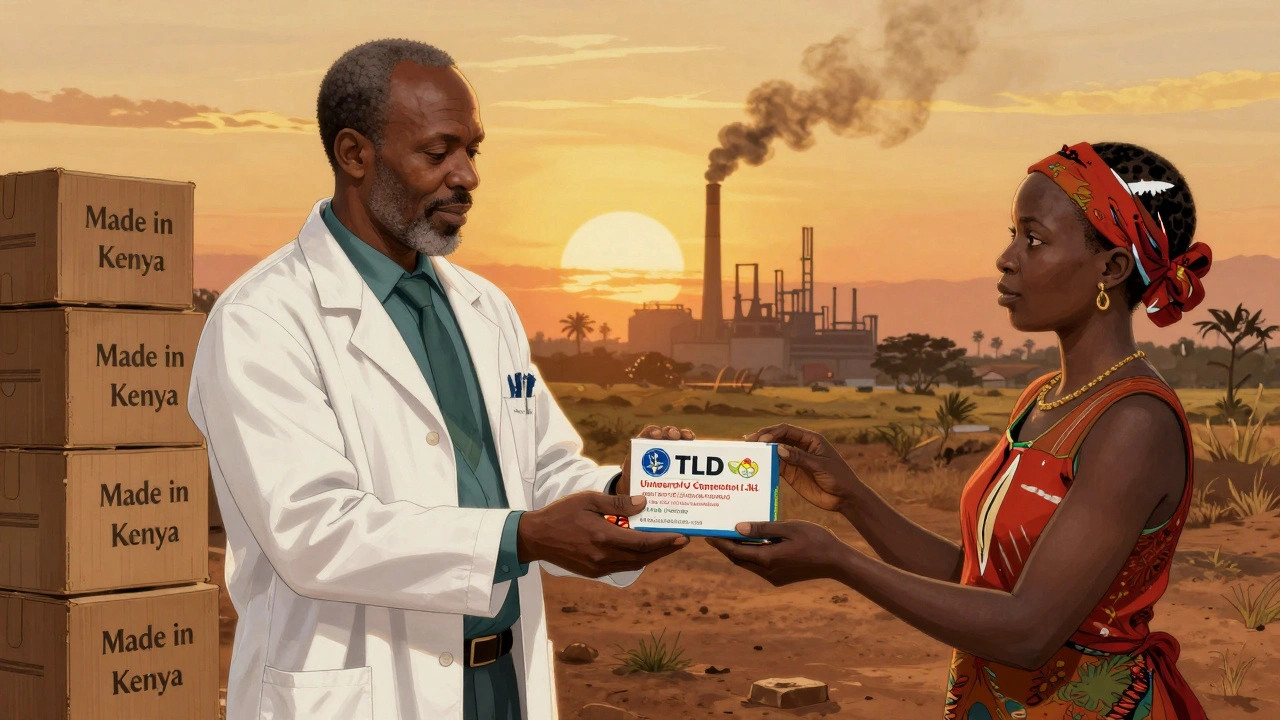
For decades, African countries relied on medicine shipped from India, Europe, and the U.S. to treat HIV. Patients waited months for supplies. Clinics ran out of drugs. Deaths climbed. Then, in May 2025, everything changed. For the first time ever, the Global Fund a major international financing organization that supports public health programs in low- and middle-income countries bought an HIV treatment made in Africa - not imported, not repackaged, but truly manufactured on the continent. The drug? TLD a fixed-dose combination of tenofovir, lamivudine, and dolutegravir, now the global standard for first-line HIV treatment. The maker? Universal Corporation Ltd a Kenyan pharmaceutical company and the first African manufacturer to receive WHO prequalification for TLD. The delivery? To Mozambique - enough to treat 72,000 people a year.
Why African-Made HIV Drugs Matter
Sub-Saharan Africa carries 65% of the world’s HIV cases. Yet for years, it imported nearly 80% of its medicines. That meant delays when global supply chains broke - like during the pandemic. It meant prices stayed high because of shipping, tariffs, and middlemen. It meant no control over quality or stockouts. When clinics ran out of drugs, people stopped taking them. And when people stop treatment, the virus comes back - stronger, harder to treat.
Local production changes that. When a drug is made in Africa, it gets to clinics faster. Costs drop. Supply becomes predictable. And when African companies make the medicine, they start understanding what African patients need - not just what foreign labs assume they need.
The TLD a fixed-dose combination of tenofovir, lamivudine, and dolutegravir, now the global standard for first-line HIV treatment regimen is a game-changer. Compared to older drugs, it’s more effective, has fewer side effects, and is harder for the virus to resist. It’s now the top choice worldwide. But until 2025, no African company could make it to WHO standards. That changed when Universal Corporation Ltd passed the test - the first African firm ever to do so.
How WHO Prequalification Works
You can’t just start making HIV drugs and sell them to African governments. There’s a reason: lives depend on it. That’s where WHO prequalification a global standard that ensures medicines meet strict quality, safety, and efficacy benchmarks comes in. It’s the gold ticket. Without it, the Global Fund, UNICEF, and other major buyers won’t touch your product.
The process is brutal. Companies must prove their factory meets international standards. They must show every batch is identical in strength and purity. They must prove the drug stays stable in hot, humid climates - something many Indian or European factories never had to test for. And they must pass surprise inspections.
Universal Corporation didn’t just pass. They set a new bar. Their success proved African manufacturers could compete at the highest level. That’s why the Global Fund’s decision to buy from them wasn’t charity - it was smart market shaping. They created demand. And when demand is steady, more companies invest.
The Ripple Effect: Beyond Pills
This isn’t just about pills. It’s about building an entire health system. While Universal was making TLD, another African company, Codix Bio a Nigerian diagnostics firm that now manufactures HIV rapid tests under WHO technology transfer, started producing HIV rapid diagnostic tests in Nigeria. They didn’t invent the test. But they got the tech, the training, and the license through WHO’s Health Technology Access Programme. Now, clinics in rural areas can test for HIV - and get results in 20 minutes - without waiting for imports.
That’s the full picture: diagnosis, treatment, supply. All now being built inside Africa. No more waiting for a shipment from halfway across the world. No more guessing if the medicine is real. This isn’t aid. It’s infrastructure.
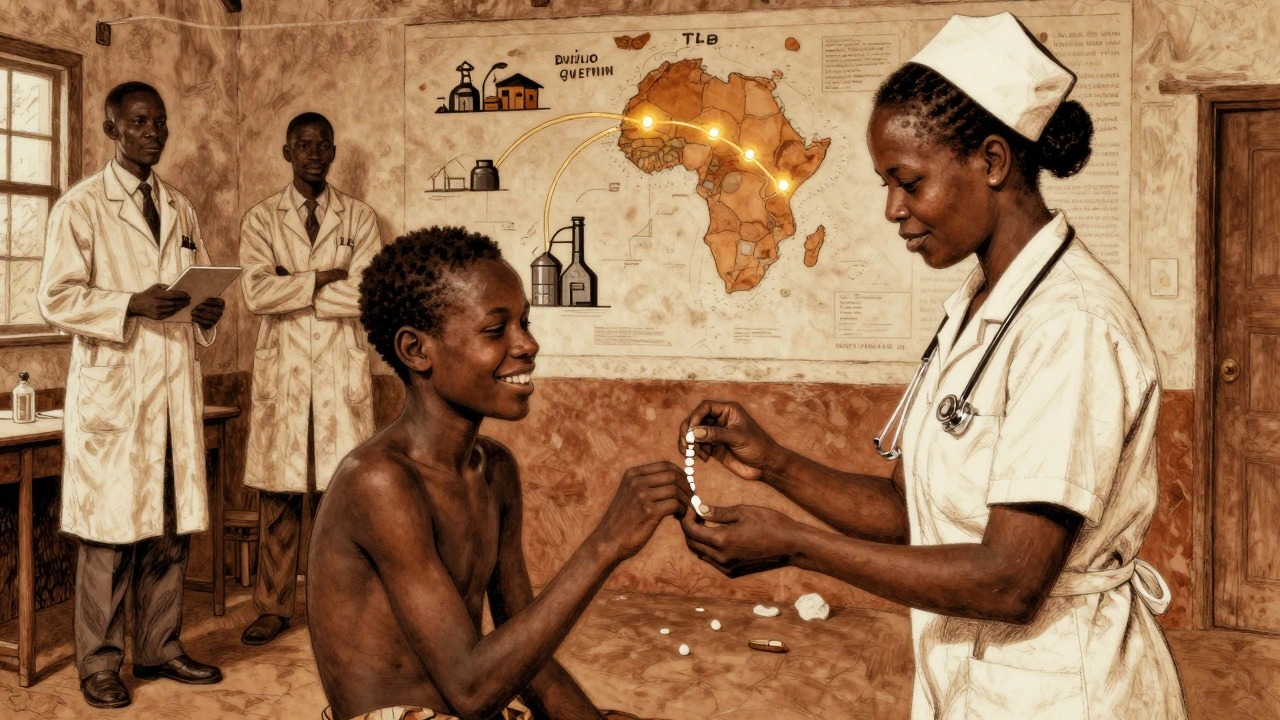
What’s Next: Long-Acting Injections and New Drugs
The next wave of HIV treatment isn’t a pill you take every day. It’s an injection you get twice a year. In October 2025, South Africa the first African country to register the long-acting cabotegravir injection for HIV prevention and treatment became the first African nation to approve the twice-yearly injection - cabotegravir long-acting a long-acting injectable HIV treatment that replaces daily pills with two shots every six months. It’s a breakthrough for people who struggle with daily pills - teens, truck drivers, sex workers, people without stable housing.
And here’s the kicker: six African companies have licenses from Gilead to make generic versions. Experts say once generics hit the market, the price could drop 80-90%. That means this life-changing treatment could soon cost less than $10 a year per person. Gilead has already signed deals with the Global Fund and PEPFAR to supply its own version of another new drug, lenacapavir a long-acting HIV prevention drug being made available at no profit to low-income countries until generics arrive, for PrEP - prevention - to up to two million people over three years. The first shipments to African countries are expected before the end of 2025.
Why This Isn’t Just About HIV
Building factories that make HIV drugs also builds factories that can make malaria pills, TB meds, and vaccines. Training inspectors who check ARV quality? They can check insulin or antibiotics next. Creating supply chains that deliver to remote clinics? They can deliver oxygen or diabetes tests tomorrow.
This is health sovereignty. It’s not about being self-sufficient overnight. It’s about having the power to respond when the next crisis hits - whether it’s a new virus, a flood, or a war. When you make your own medicine, you don’t beg. You act.
The African Union’s Pharmaceutical Manufacturing Plan for Africa (PMPA) wants to go from 2-3% local production today to 40% by 2040. That’s ambitious. But with the Global Fund, WHO, Unitaid, and the Gates Foundation all pushing the same direction, it’s no longer fantasy. It’s a plan with momentum.
The Challenges Still Left
Don’t get it wrong - this is progress, not perfection. Africa still needs about 15 million person-years of first-line ARVs every year. Right now, African-made drugs cover maybe 5% of that. Even with new factories opening in Q4 2025, scaling up will take years. Regulatory systems still vary from country to country. Some governments still prefer buying from known foreign brands, even if they’re more expensive.
And let’s be real: manufacturing drugs is hard. It takes billions in investment, decades of training, and political will that doesn’t always exist. But the proof is here: it’s possible. Universal Corporation proved it. Codix Bio proved it. South Africa’s fast approval of the injection proved it.
The real question isn’t whether Africa can do it. It’s whether the world will keep supporting it.
What This Means for the Future
By 2030, African-made antiretrovirals could supply 20-30% of the continent’s needs. That’s not enough to replace all imports - but it’s enough to break the cycle of dependence. It’s enough to give clinics confidence. It’s enough to save thousands of lives every year.
This shift also changes who leads the research. For too long, HIV drugs were designed in labs in the U.S. or Europe, then pushed onto African patients. Now, African scientists are starting to ask: What if we designed treatments for our people? What if we tested drugs on our strains of HIV? What if we made pills that don’t interact with traditional medicines people already use?
That’s the next frontier. Not just making the drugs - but making them right.
For the first time, African countries aren’t just patients in the global health system. They’re makers. Builders. Leaders. And the world is finally starting to notice.


Write a comment