
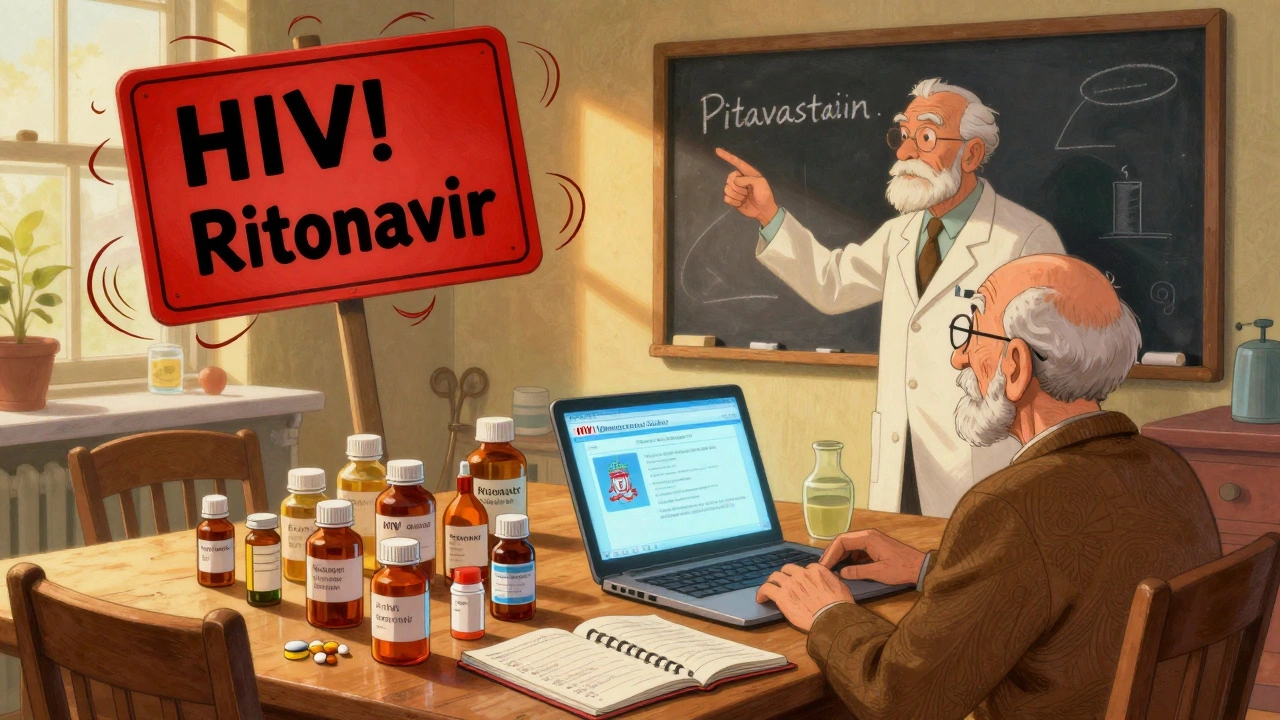
When you're on antiretroviral therapy (ART) for HIV, taking other medications isn't just about adding pills to your routine-it's about avoiding life-threatening mistakes. A simple over-the-counter painkiller, a common cholesterol drug, or even an herbal supplement can turn your HIV treatment into a dangerous gamble. These aren't rare edge cases. In fact, antiretroviral interactions are one of the most frequent causes of hospitalizations in people living with HIV over 50. And the risk is growing fast.
Why This Isn't Just About HIV Anymore
Most people think of HIV as a young person's disease. That’s outdated. Half of all people living with HIV in the U.S. are now 50 or older. That means they're not just managing one condition-they're juggling diabetes, high blood pressure, heart disease, depression, arthritis, and more. On average, someone over 65 with HIV is taking nearly 10 different medications. That’s a recipe for collisions. The problem isn’t the HIV drugs themselves. It’s how they interact with everything else. Some antiretrovirals slow down your body’s ability to break down other drugs. Others speed it up. The result? Either you get too much of another medication-leading to overdose-or too little, making it useless. Either way, your health pays the price.The Three Big Classes of ART-and How They Play Favorites
Not all antiretrovirals are the same when it comes to drug interactions. They fall into three main groups, and each has its own risk profile. Protease inhibitors (PIs), especially when boosted with ritonavir or cobicistat, are the heavyweight champions of drug interactions. Ritonavir alone has over 200 documented interactions. It shuts down a key liver enzyme called CYP3A4, which is responsible for breaking down about 60% of all prescription drugs. That means if you’re on a ritonavir-boosted regimen, your body can’t clear things like statins, blood thinners, or even erectile dysfunction pills properly. The result? Toxic buildup. Non-nucleoside reverse transcriptase inhibitors (NNRTIs) like efavirenz do the opposite. They crank up CYP3A4 activity, making other drugs disappear too fast. Efavirenz can slash the levels of birth control pills, antifungals, and even some antidepressants by 75%. That’s not just ineffective-it’s dangerous. Imagine taking your birth control and still getting pregnant because your body cleared it before it could work. Then there are the integrase strand transfer inhibitors (INSTIs)-dolutegravir, bictegravir, and raltegravir. These are the quiet heroes. They barely touch the liver’s drug-processing system. Bictegravir has only seven major interactions. Dolutegravir? Just eight. That’s why they’re now the first-line choice for most new patients. Simpler. Safer. Fewer surprises.The Deadliest Interactions You Must Avoid
Some combinations aren’t just risky-they’re banned. Here are the ones that can kill you if you don’t know about them.- Statins: Simvastatin and lovastatin-Absolutely forbidden with ritonavir or cobicistat. These drugs can spike in your blood by 20 to 30 times. That means muscle breakdown (rhabdomyolysis), kidney failure, and death. Pitavastatin and fluvastatin are safe alternatives.
- Inhaled steroids: Fluticasone and budesonide-Used for asthma and allergies. With boosted PIs, they don’t get broken down. They pile up in your body. Result? Cushing’s syndrome-moon face, weight gain, high blood sugar, and adrenal shutdown. One study found 17% of patients on these combos ended up in the hospital.
- Erectile dysfunction drugs: Avanafil-Completely off-limits with ritonavir or cobicistat. Sildenafil (Viagra) can still be used, but only at 25mg every 48 hours-not the usual 50mg or 100mg.
- Antidepressants: Fluoxetine-When paired with ritonavir, serotonin levels go through the roof. That’s serotonin syndrome: seizures, high fever, confusion, muscle rigidity. It’s rare, but deadly. Dose reductions or switching to sertraline are often needed.
- Immunosuppressants: Tacrolimus-Used after organ transplants. If you switch from a boosted PI to dolutegravir, your tacrolimus level can crash by 75%. That’s rejection risk. Dose adjustments are non-negotiable.
The Hidden Culprits: Supplements, Herbs, and Street Drugs
Most doctors ask about prescriptions. Few ask about supplements. That’s a mistake. St. John’s Wort is the worst offender. It’s sold as a natural mood booster. But it’s a powerful CYP3A4 inducer. If you’re on efavirenz, it can drop your HIV drug levels by 60%. That’s like skipping doses for weeks. Treatment failure. Drug resistance. The virus comes back stronger. Even something as simple as calcium supplements can interfere with dolutegravir if taken at the same time. You need to space them out by at least two hours. And then there are recreational drugs. Ketamine, cocaine, MDMA-these aren’t just illegal. When mixed with ritonavir, they stick around much longer. Your body can’t clear them. The high lasts longer. The risk of overdose skyrockets. No one talks about this in HIV clinics. But it’s happening.What to Do: A Simple Action Plan
You don’t need to be a pharmacist to stay safe. Here’s what actually works:- Keep a running list of every pill, patch, spray, herb, and vitamin you take. Include doses and how often. Bring it to every appointment.
- Use the Liverpool HIV Drug Interactions Checker. It’s free, updated monthly, and trusted worldwide. Type in your ART and any new medication. It tells you if it’s safe, needs a dose change, or is banned.
- Ask before you start anything new. Even if it’s from a pharmacy or a friend. “Will this interact with my HIV meds?” isn’t a dumb question-it’s life-saving.
- Never stop or change a dose on your own. If your doctor says to switch from a boosted PI to dolutegravir, your other meds might need adjusting too. That’s not optional.
- Get your cholesterol checked if you’re on a PI. Statin choices matter. Pitavastatin is your safest bet.

What’s Changing-and What’s Coming
The future of HIV treatment is getting simpler. New drugs like lenacapavir are injected only twice a year. They don’t mess with liver enzymes. That means fewer interactions. The next generation of antiretrovirals is being designed to avoid CYP3A4 entirely. By 2030, experts predict new regimens will have 80% fewer dangerous interactions than today’s boosted PIs. The shift is already here. More than 80% of new HIV prescriptions in the U.S. now start with INSTIs-dolutegravir or bictegravir. They’re not just effective. They’re forgiving. They let you live with other conditions without constant fear.Final Warning: Don’t Assume It’s Safe
Just because your doctor didn’t warn you doesn’t mean there’s no risk. Many providers aren’t trained in HIV drug interactions. The CDC says 42% of adverse events from ART interactions are preventable-if you’re proactive. Your HIV meds are powerful. But they’re not magic. They play by the same rules as every other drug in your body. And if you ignore how they interact with the rest of your medicine cabinet, you’re playing Russian roulette with your health. Don’t wait for a crisis. Check your list. Talk to your pharmacist. Use the Liverpool tool. Stay informed. Your life depends on it.Can I take ibuprofen with my HIV meds?
Yes, ibuprofen is generally safe with most antiretrovirals, including INSTIs and NNRTIs. But if you’re on a ritonavir- or cobicistat-boosted protease inhibitor, use it sparingly and only for short periods. Long-term use with boosted PIs can raise kidney and liver strain. Always check with your provider if you’re taking it daily.
Is there a safe statin I can take with ART?
Yes. Pitavastatin and fluvastatin are the safest choices with boosted protease inhibitors. Rosuvastatin can be used at low doses (5-10mg), but requires monitoring. Simvastatin and lovastatin are absolutely contraindicated-they can cause fatal muscle damage.
Can I use St. John’s Wort for depression while on HIV meds?
No. St. John’s Wort reduces HIV drug levels by up to 60%, which can lead to treatment failure and drug resistance. It’s not worth the risk. Talk to your doctor about safer antidepressants like sertraline or escitalopram, which have minimal interactions.
Do long-acting HIV injections have fewer interactions?
Not necessarily. Cabotegravir and rilpivirine injections have long half-lives-up to 55 days. That means drug interactions can still occur months after your last shot. If you’re switching to these, your other meds still need review. The risk doesn’t disappear-it just lasts longer.
What should I do if I start a new medication?
Stop. Don’t take it yet. Check the Liverpool HIV Drug Interactions Checker or ask your pharmacist to run a scan. If you’re unsure, wait until you’ve spoken with your HIV provider. Even common meds like antacids, blood pressure pills, or sleep aids can interfere. It’s not worth guessing.
Are over-the-counter cold medicines safe with ART?
Many are, but some contain pseudoephedrine or dextromethorphan, which can interact with boosted PIs. Always check the label. Choose single-ingredient products over combo cold remedies. And avoid products with alcohol or guaifenesin if you’re on a PI-both can stress your liver.


Write a comment