

What Bronchiectasis Really Feels Like
You wake up with a cough that won’t quit. Not just a little hack-this one’s deep, wet, and leaves you drained. By mid-morning, you’ve cleared at least a shot glass full of thick, yellow-green mucus. It smells bad. You’ve learned to hide it. This isn’t a cold. It’s not allergies. It’s bronchiectasis-a condition where your airways have become permanently stretched and scarred, turning them into sticky traps for bacteria.
Unlike asthma or COPD, bronchiectasis doesn’t come with wheezing or tightness. It comes with mucus. A lot of it. And every time you can’t clear it, your lungs get more inflamed, more infected, and more damaged. The cycle starts small-a single pneumonia or whooping cough years ago-and grows into daily battles. You’re not alone. Around 350,000 people in the U.S. have been diagnosed, but experts think many more go undiagnosed because symptoms creep in slowly. By the time people realize something’s wrong, the damage is already done.
Why Your Cough Won’t Stop
The core problem? Your airways lost their ability to clean themselves. Normally, tiny hairs called cilia sweep mucus up and out. In bronchiectasis, those hairs are destroyed. The mucus piles up. Bacteria thrive in it. Your body sends white blood cells to fight back, but they die and turn the mucus thick and green. That’s what you’re coughing up.
Doctors measure severity with a chest CT scan. If the bronchus (airway) is more than 1.5 times wider than the artery next to it, that’s bronchiectasis. No guesswork. Just imaging. Most people produce 30 milliliters or more of sputum every day. That’s about two tablespoons. Some produce way more. The smell? It’s not just unpleasant-it’s a sign of infection. And if you’re coughing this much for more than three months, you’re in the chronic phase.
The Only Thing That Really Works: Daily Airway Clearance
Antibiotics help. But they’re not the solution. The real game-changer is clearing mucus every single day. Not when you feel bad. Not when you’re in the hospital. Every day. That’s what specialists like Dr. Shivani Gupta at Penn Medicine say: “Daily airway clearance isn’t optional-it’s as essential as taking antibiotics.”
There are several techniques. One is active cycle of breathing techniques (ACBT). It’s simple: breathe in gently, hold for 2 seconds, then do a series of controlled huffs-short, forceful exhales without closing your throat. You do them from low to high lung volume. Another is positive expiratory pressure (PEP) devices like the Aerobika®. You breathe out through a resistance valve, which keeps your airways open and pushes mucus up. Then you cough it out.
Studies show people who do this daily have 47% fewer hospital visits. Those who skip it lose lung function 45 mL per year faster than those who stick with it. That’s the difference between staying active and needing oxygen. You don’t need fancy gear. A simple PEP device costs $150-$200. An oscillating vest? $5,000-$7,000. Most people find the handheld PEP works just as well.
When Antibiotics Are Necessary-and When They’re Not
Antibiotics are tools, not crutches. They’re used in two ways: during flare-ups and as long-term prevention.
For flare-ups, doctors often prescribe 14 days of oral antibiotics like amoxicillin-clavulanate or doxycycline. But if you’re coughing up green mucus and feel worse for more than a week, don’t wait. See your doctor. Delayed treatment means more damage.
For long-term use, low-dose azithromycin (250-500 mg three times a week) is common. The EMBRACE trial showed it cuts exacerbations by 32%. But here’s the catch: if you use antibiotics without cleaning your airways, you’re asking for resistance. One study found 38% of patients developed antibiotic-resistant bacteria within five years of chronic use. That’s why experts warn: “Over-reliance on antibiotics without adequate clearance creates resistant organisms.”
Inhaled antibiotics like tobramycin (300 mg twice daily) are used for patients with Pseudomonas aeruginosa-a tough bug that loves bronchiectasis lungs. It reduces colonization by 56%. But again, only if paired with daily clearance.

What Else Helps: Nebulizers, Hydration, and New Treatments
Nebulized hypertonic saline (7% salt solution) is a simple, powerful tool. It pulls water into the mucus, making it thinner and easier to cough up. Most people use 3 mL once or twice a day. Add dornase alfa (Pulmozyme), originally for cystic fibrosis, and you get even better results. Cleveland Clinic recommends this combo for thick mucus.
Hydration matters more than you think. Drink at least 2 liters of water daily. It’s not magic-it’s physics. Thinner mucus moves easier. If you’re struggling to expectorate, try steam inhalation or a hot shower before your clearance routine.
New treatments are coming. In 2023, the FDA approved gallium maltolate for stubborn Pseudomonas infections. It disrupts bacterial iron use and cut exacerbations by 42% in trials. Researchers are also testing inhaled bacteriophages-viruses that target specific bacteria. Early results show 68% eradication rates in resistant cases. These aren’t available everywhere yet, but they’re the future.
The Real Barrier: Time, Cost, and Access
The biggest problem isn’t the science. It’s the daily grind. Doing 15-20 minutes of airway clearance twice a day sounds simple until you’re working two jobs, raising kids, or managing chronic pain. A 2023 NHS survey found 42% of patients struggle to keep up with routines because of life demands.
Cost is another hurdle. While PEP devices are affordable, insurance doesn’t always cover them. Nebulizers and medications add up. One patient reported going from 9 hospitalizations a year to just 1 after sticking with daily nebulized saline and ACBT-but she had to fight her insurer for three months to get coverage.
And access? Medicaid patients have 3.2 times more flare-ups than those with private insurance. Why? Fewer visits to respiratory therapists. Many clinics don’t offer training. Only 40% of hospitals provide illustrated guides in multiple languages. If you’re learning this alone, you’re at a disadvantage.
How to Get Started-Without Getting Overwhelmed
You don’t need to do everything at once. Start with one thing:
- Get a diagnosis confirmed with a CT scan.
- Ask your doctor for a referral to a respiratory therapist. They’ll teach you huff coughing, PEP, or ACBT. Most need 3-4 sessions to get it right.
- Buy a handheld PEP device (Aerobika® or similar). It’s cheaper than a monthly coffee subscription.
- Start with one 15-minute session daily. Add the second later.
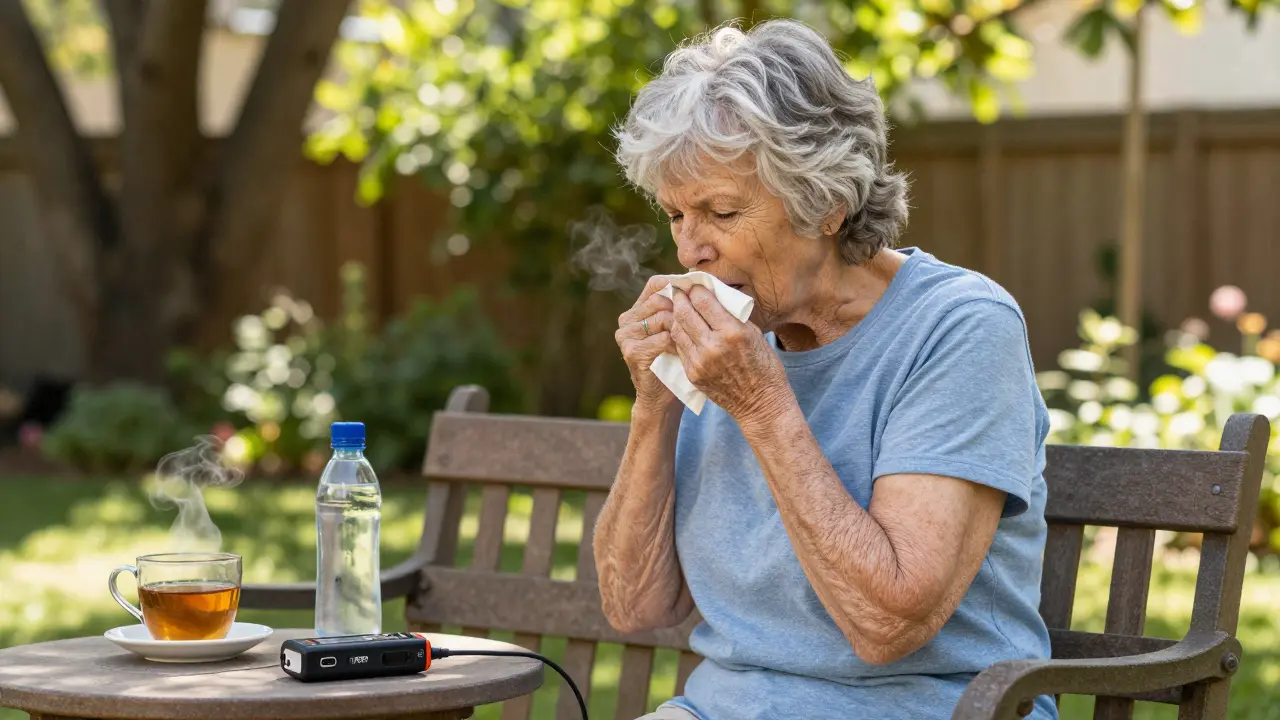
- Use hypertonic saline if your mucus is thick. Keep a water bottle nearby.
- Track your symptoms. Use the American Thoracic Society’s “Clearing the Air” app. It logs your routines and flare-ups.
Don’t wait for perfection. Even doing it 5 days a week is better than none. The goal isn’t to be flawless-it’s to break the cycle.
What Doesn’t Work
Antibiotics alone? No. They help short-term but cause resistance if used without clearance.
Bronchodilators alone? Not really. They only improve symptoms by 12% on their own. But when paired with airway clearance? That jumps to 28%.
Just drinking more water? Helpful, but not enough. You still need active clearance.
Waiting for a “miracle cure”? There isn’t one. Bronchiectasis doesn’t reverse. But it can stabilize. And that’s enough to live well.
What Success Looks Like
One woman in Ohio went from 9 hospitalizations a year to 1. She started with ACBT, added hypertonic saline, and stuck with it for six months. Her sputum volume dropped by 70%. She’s back to gardening.
Another man in Texas switched from a $6,000 vest to a $180 PEP device. He now does his routine while watching TV. His doctor says his lung function hasn’t declined in two years.
Success isn’t about being symptom-free. It’s about control. About not letting bronchiectasis run your life. It’s about knowing you can cough up the mucus, breathe easier, and still go to work, play with your grandkids, or take a walk without fear.
Can bronchiectasis be cured?
No, bronchiectasis cannot be cured. The damage to the airways is permanent. But with consistent airway clearance, proper antibiotics, and good hydration, you can stop the cycle of infection and inflammation. Many people live full, active lives without needing oxygen or surgery.
How do I know if my mucus is infected?
Infected mucus is usually thick, yellow or green, and has a foul smell. If you notice a sudden increase in volume, feel feverish, or get more tired than usual, it’s likely a flare-up. Don’t wait-contact your doctor. Early treatment prevents more lung damage.
Is it safe to take azithromycin long-term?
Yes, for many people. Low-dose azithromycin (250-500 mg three times a week) is proven to reduce flare-ups by 32%. But it’s only safe if you’re also doing daily airway clearance. Without it, you risk developing antibiotic-resistant bacteria. Your doctor should monitor your hearing and liver function every 6-12 months.
Can I use a nebulizer at home?
Absolutely. Nebulized hypertonic saline and dornase alfa are safe for home use. You’ll need a compressor and a mask or mouthpiece. Most insurance covers them if your doctor documents your mucus production and clearance routine. Start with 3 mL of 7% saline once a day, and increase to twice daily if needed.
What if I can’t afford the equipment?
You don’t need expensive gear. Simple techniques like huff coughing and postural drainage (lying in positions to help mucus drain) cost nothing. Ask your respiratory therapist for free or low-cost alternatives. Some nonprofits and patient groups offer device grants. The Bronchiectasis and NTM Initiative has resources for financial help.
Should I avoid exercise?
No. Exercise is one of the best things you can do. It helps your lungs move mucus naturally. Walk, swim, cycle-anything that gets your heart up. Just do your airway clearance after. Many patients say exercise makes their daily clearance easier and reduces coughing throughout the day.
What Comes Next
There’s no finish line with bronchiectasis. But there’s a path forward. It’s not about fighting the disease-it’s about managing it so it doesn’t manage you. Stick with your clearance routine. Take antibiotics only when needed. Drink your water. Use your nebulizer. Track your progress. And if you’re struggling, reach out. You’re not alone. Thousands are doing the same thing-day after day-and living well because of it.


Write a comment