

When cancer spreads or treatments like chemotherapy and radiation take their toll, pain doesn’t just happen-it dominates. For nearly half of all cancer patients, pain is a constant, crushing companion. Some feel it as a deep ache from tumors pressing on nerves or bones. Others describe sharp, electric shocks from damaged nerves. And for many, the pain doesn’t stop when they lie down, sleep, or even take their usual meds. This isn’t just discomfort. It’s a barrier to living, to eating, to sleeping, to holding on to hope.
The good news? We don’t have to accept this pain as inevitable. Modern cancer pain management has moved far beyond just handing out pills. It’s now a layered, personalized strategy that combines strong medications, targeted nerve procedures, and proven non-drug therapies. The goal isn’t to eliminate pain entirely-though that’s the dream-but to make it manageable enough that life still has room to breathe.
How Opioids Work in Cancer Pain
Opioids remain the backbone of treatment for moderate to severe cancer pain. Drugs like morphine, oxycodone, and fentanyl work by binding to receptors in the brain and spinal cord that control pain signals. They don’t cure the cancer, but they can turn a 9/10 pain level into a 3/10, making it possible to eat, talk, or even laugh again.
The World Health Organization’s three-step ladder, first introduced in 1986 and updated in 2018, still guides most treatment plans. Step one uses over-the-counter drugs like acetaminophen or ibuprofen for mild pain. Step two brings in weaker opioids like tramadol or codeine for moderate pain. Step three jumps to strong opioids like morphine for severe pain. But here’s the catch: the ladder isn’t always climbed step by step. Many patients with advanced cancer start at step three because their pain is too intense to wait.
A 2024 meta-analysis in Frontiers in Pain Research found strong opioids reduce pain scores by an average of 4.2 points on a 10-point scale-far more than NSAIDs alone, which only drop it by 2.1 points. That difference? It’s the difference between lying curled up and sitting up to talk to your grandchild.
But opioids come with baggage. Eighty-one percent of patients develop constipation. More than half get nauseous. Nearly half feel drowsy. And while these side effects can be managed-with laxatives, anti-nausea meds, or dose adjustments-many patients stop taking their pills because they feel foggy or can’t go to the bathroom. That’s why doctors now prescribe around-the-clock doses instead of waiting for pain to return. It’s more stable, more predictable, and less likely to trigger breakthrough pain.
Nerve Blocks: When Pain Has a Specific Address
Not all cancer pain is the same. Sometimes, the pain comes from one clear source-a tumor pressing on the celiac plexus (a nerve bundle near the pancreas), or a bone metastasis in the spine. That’s where nerve blocks come in.
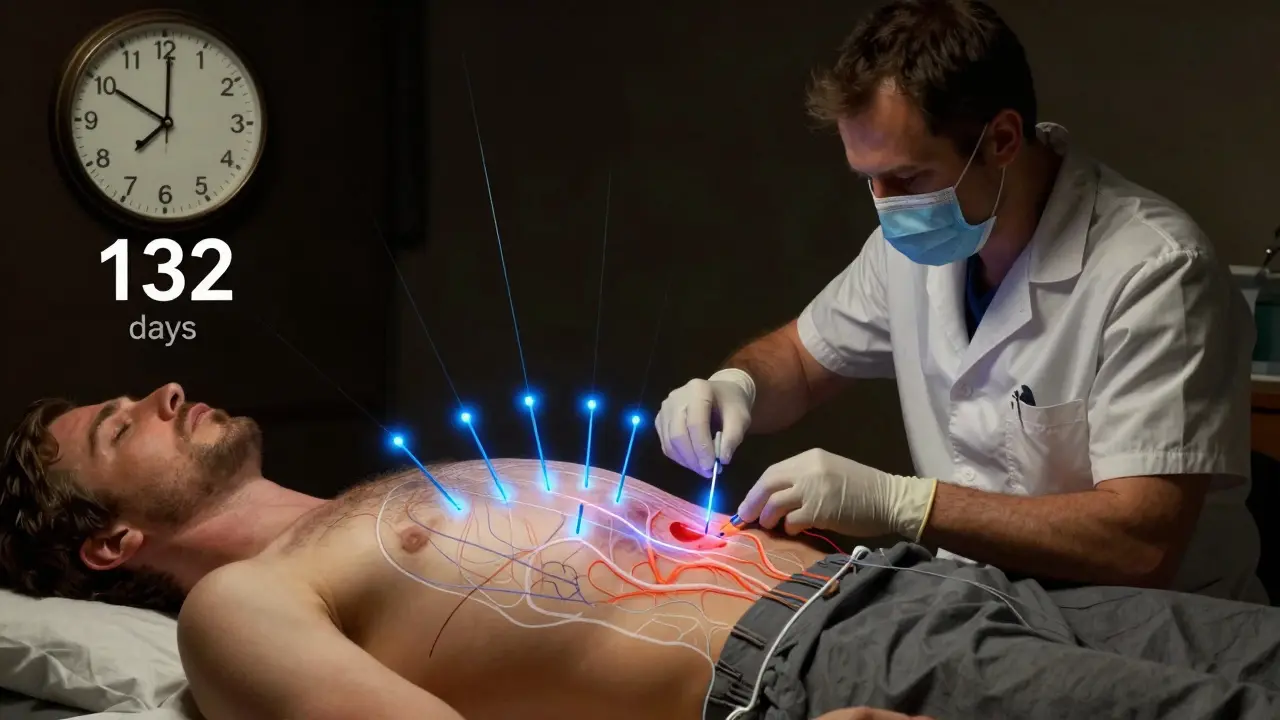
A nerve block is like a targeted pause button. A doctor injects numbing medicine-sometimes with steroids-right next to the nerves sending pain signals. For pancreatic cancer patients, a celiac plexus block can cut pain from an 8/10 to a 3/10 and keep it there for over four months. For spinal metastases, epidural catheters deliver pain meds directly into the space around the spinal cord, often with less systemic side effects than oral opioids.
Success rates? Between 65% and 85% for the right patients. A 2022 Journal of Clinical Oncology study showed celiac plexus blocks gave median pain relief of 132 days for pancreatic cancer. That’s more than four months of relief from a single procedure.
But here’s the problem: fewer than one in five eligible patients get these treatments. Why? Access. It requires specialized training, equipment, and time. Many hospitals don’t have pain specialists on staff. Insurance doesn’t always cover it. And some doctors still think opioids are “enough.”
That’s changing. The European Pain Federation found that 79% of patients who get a nerve block experience major pain relief-but only 22% of those who could benefit even get the chance. That’s not just a gap. It’s a failure.
Integrative Care: More Than Just Acupuncture
If opioids are the sledgehammer and nerve blocks are the scalpel, integrative therapies are the gentle hands that help the body heal itself.
Acupuncture, massage, mindfulness, and even acupressure wristbands aren’t just “nice to have.” They’re backed by hard data. A 2024 review of 54 studies found mindfulness-based stress reduction helped 87% of cancer patients report lower pain and less anxiety. Acupuncture reduced pain intensity by 38.7% in over 80% of studies, according to whole systems medicine research. One patient on Reddit shared that acupressure wristbands cut her chemotherapy nausea by 70% and cut her opioid use in half.
And it’s not just about feeling better. Integrative therapies help with the side effects of opioids. Acupuncture has been shown to reduce constipation and nausea. Massage therapy improves sleep and lowers stress hormones. Even simple breathing exercises can dial down the body’s pain response.
A 2023 PLOS One analysis of 17 trials involving over 1,000 patients found non-drug therapies like aromatherapy and reflexology had statistically significant effects (p<0.001). Effect sizes ranged from 0.45 to 0.87-meaning these therapies weren’t just placebo. They were meaningful.
Still, cost is a barrier. A single acupuncture session can run $85-$120, and most insurance doesn’t cover it. That’s why cancer centers are starting to offer them in-house. In the U.S., 78.4% of cancer centers now offer integrative therapies-up from just over half in 2020.
Why One Size Doesn’t Fit All
Here’s the truth: cancer pain isn’t one thing. It’s often a mix-bone pain, nerve pain, muscle spasms, and emotional distress all tangled together. That’s why the old three-step ladder is outdated for many.
Dr. Russell Portenoy pointed out in 2023 that 42% of cancer patients have mixed pain from the start. That means they need opioids and nerve-targeted drugs and integrative care from day one. Waiting to escalate to strong opioids while trying NSAIDs first? That’s like waiting for a flood to get worse before you build a dam.
Genetics also play a role. About 5-10% of people are “poor metabolizers” of codeine because of a gene variation (CYP2D6). For them, codeine doesn’t convert to morphine at all. It’s useless. Yet many still get it as a “step two” drug. That’s not just ineffective-it’s harmful.
And then there’s breakthrough pain. Sixty-four percent of patients on stable opioid doses still get sudden, sharp spikes in pain. These episodes need fast-acting meds like fentanyl lozenges-not just waiting for the next scheduled dose.

What’s New in 2025
The field is moving fast. In March 2024, the FDA approved tanezumab, a monoclonal antibody that blocks nerve growth factor. In trials, it cut bone pain by 45.7%-better than placebo and without the constipation or drowsiness of opioids. Sales hit $3.2 billion in 2024, and it’s now being used in major cancer centers.
AI is also stepping in. A 2024 Journal of Clinical Oncology study showed AI algorithms analyzing electronic health records predicted pain spikes 72 hours before they happened. That gave doctors time to adjust meds before the patient even noticed the pain. The result? A 32.7% improvement in pain control.
Blockchain-based prescription systems are being piloted in 12 countries to stop opioid misuse without denying access to cancer patients. South Korea is leading the way, with a national rollout expected in 2025 to cut prescription errors by nearly half.
By 2030, experts predict personalized pain algorithms will use genetic data, tumor location, and pain history to auto-generate treatment plans. CYP2D6 testing is already done in 63% of European cancer centers. It’s not science fiction-it’s happening now.
What Patients Need to Know
If you or someone you love is facing cancer pain, here’s what to ask:
- Is my pain being assessed every day? Pain should be scored (0-10) at least once a day, and more often if it’s changing.
- Am I getting the right type of opioid? If tramadol isn’t working after two weeks, don’t wait. Ask about switching to oxycodone or fentanyl.
- Have I been evaluated for nerve blocks? If your pain is localized-belly, back, hip-ask a pain specialist. It might be your best option.
- Can I try integrative therapies? Even if insurance doesn’t cover them, ask if your center offers free or low-cost acupuncture, massage, or mindfulness sessions.
- Am I being monitored for side effects? Constipation isn’t normal. If laxatives aren’t working, your dose or type of opioid may need changing.
The most important thing? Don’t suffer in silence. Pain is treatable. And you deserve to live with dignity-even while fighting cancer.
Are opioids the only option for severe cancer pain?
No. While opioids are the most effective for severe pain, they’re not the only tool. Nerve blocks can provide long-lasting relief for localized pain, and monoclonal antibodies like tanezumab offer a non-opioid alternative for bone pain. Integrative therapies like acupuncture and mindfulness also reduce pain intensity and opioid needs. A multimodal approach is always better than relying on one method alone.
Can nerve blocks replace opioids completely?
Sometimes, but not always. Nerve blocks work best for pain coming from a specific area-like the abdomen, spine, or a single bone metastasis. For widespread pain or pain from multiple sources, opioids are still needed. The best outcomes come from using nerve blocks to reduce opioid doses, not replace them entirely.
Is acupuncture safe for cancer patients?
Yes, when performed by a trained professional using sterile needles. Studies show it reduces pain, nausea, and fatigue in cancer patients with minimal risk. It’s especially helpful for those who can’t tolerate opioid side effects. Always choose a practitioner who understands cancer-related immune suppression and avoids needling areas with recent radiation or surgery.
Why aren’t nerve blocks offered more often?
Access is the main barrier. Nerve blocks require specialized training, equipment, and time. Many hospitals don’t have pain specialists on staff, and insurance doesn’t always cover the procedure. Even when available, doctors may not know which patients are good candidates. As a result, only about 22% of eligible patients receive them-despite 79% experiencing major relief when they do.
What’s the biggest mistake in cancer pain management?
Waiting too long to treat pain. Many patients and doctors assume pain will get worse before it gets better, so they delay strong treatment. But uncontrolled pain damages nerves, increases anxiety, and makes future treatment harder. The best practice is to treat pain aggressively from the start-using a combination of opioids, nerve blocks, and integrative care-rather than climbing the ladder slowly.
By 2035, cancer pain will affect 31.7% more people than today. That’s not a future problem-it’s a present crisis. The tools to manage it exist. What’s missing is the will to use them fully, fairly, and early.


Write a comment