

If you're taking a calcium channel blocker for high blood pressure, your morning glass of orange juice might be more dangerous than you think. Not all citrus is the same, but grapefruit - and a few close relatives - can turn your carefully dosed medication into a potential health emergency. This isn't a theory. It's a well-documented, clinically proven interaction that sends thousands to the ER every year.
Why Grapefruit Is a Problem
Grapefruit doesn't just taste bitter - it contains chemicals called furanocoumarins, specifically 6',7'-dihydroxybergamottin and bergamottin. These compounds shut down an enzyme in your gut called CYP3A4. That enzyme normally breaks down certain drugs before they enter your bloodstream. When it's blocked, your body absorbs way more of the drug than intended.For calcium channel blockers like felodipine, that means your blood levels can spike 3 to 5 times higher than normal. One 200ml glass of grapefruit juice is enough to cause this effect. And it doesn’t matter if you drink it at breakfast and take your pill at night. The enzyme stays disabled for up to 72 hours. So even if you space them out, the risk remains.
Which Calcium Channel Blockers Are Affected?
Not all calcium channel blockers react the same way. The big red flags are the dihydropyridine types:- Felodipine - the most sensitive. Grapefruit can boost its levels by up to 500%.
- Nicardipine and Nimodipine - also high risk.
- Pranidipine - less common but still dangerous.
- Amlodipine - interaction is weaker, but still present. Don’t assume it’s safe.
Non-dihydropyridines like verapamil and diltiazem may have some interaction, but it’s less consistent and usually less severe. Still, if you’re unsure, avoid grapefruit entirely.
What Happens When the Interaction Occurs?
Your blood pressure drops too far, too fast. That’s the main danger. Symptoms include:- Severe dizziness or lightheadedness
- Flushing or sudden warmth
- Swelling in your ankles or feet
- Rapid heartbeat (reflex tachycardia)
- Fainting or near-fainting episodes
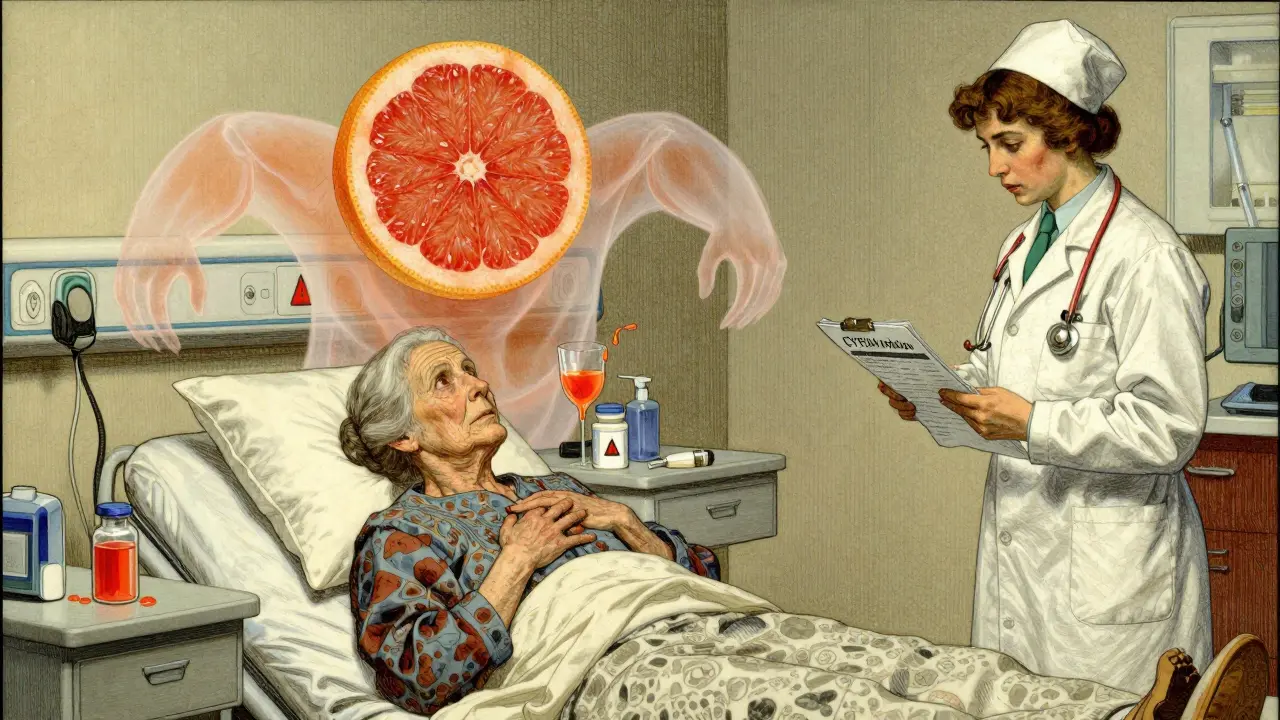
These aren’t just uncomfortable - they’re dangerous. Elderly patients are especially at risk. One nurse practitioner described a case where an older woman couldn’t stand after accidentally combining grapefruit juice with her medication. She ended up in the hospital. That’s not rare. Around 15,000 emergency visits each year in the U.S. are tied to grapefruit-drug interactions, mostly involving blood pressure meds.
What About Other Citrus Fruits?
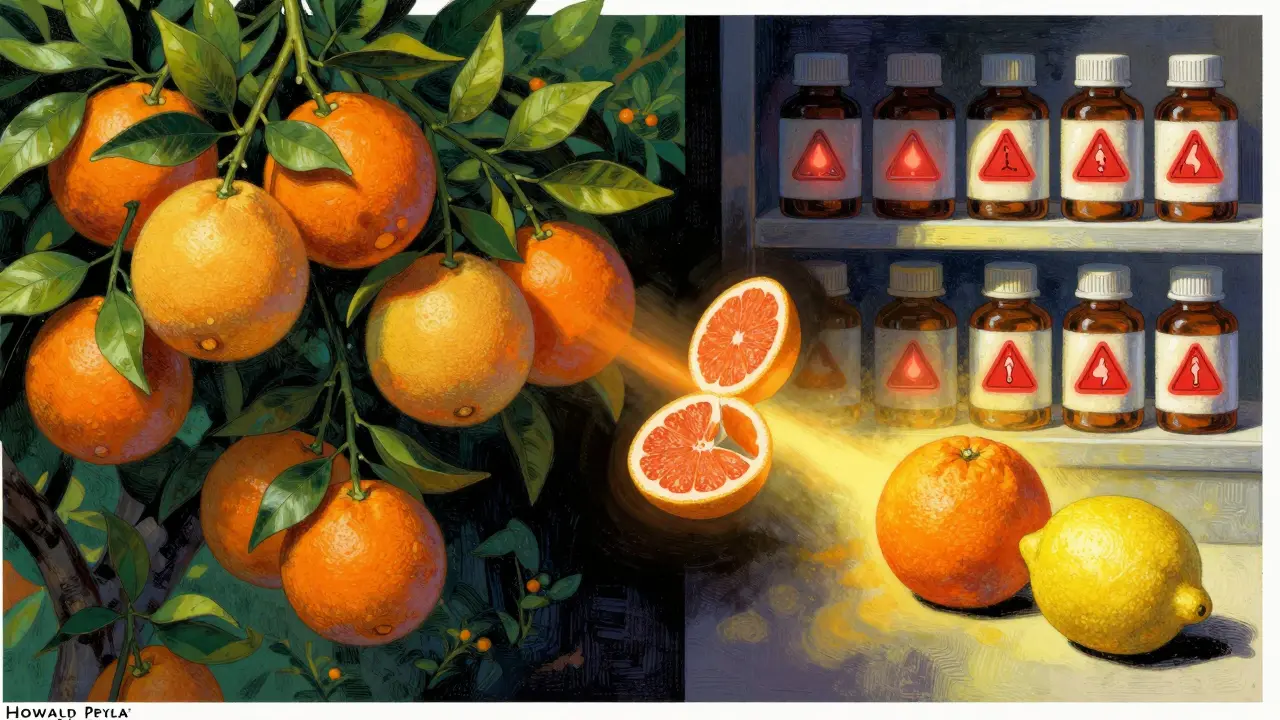
Not all citrus is created equal. Sweet oranges (like Valencia or navel) are generally safe. They don’t contain enough furanocoumarins to cause the problem. Orange juice, marmalade, and tangerines? Low risk - but still, some caution is wise.But avoid these:
- Grapefruit - the worst offender
- Seville (sour) oranges - used in marmalade, they’re just as dangerous as grapefruit
- Tangelos - a hybrid of tangerine and grapefruit, they contain the same harmful compounds
Even grapefruit-flavored sodas, candies, or supplements can contain enough furanocoumarins to cause issues. Read labels. If it says "grapefruit flavor," assume it’s risky.
What Should You Do Instead?
The safest move is simple: avoid grapefruit and its close relatives entirely while taking a calcium channel blocker. No exceptions. No "just a little." The science doesn’t support it.If you love citrus, switch to sweet oranges, lemons, limes, or even pineapple. They won’t interfere. And if you're unsure whether your medication is affected, check the label. Felodipine, nimodipine, and others have black box warnings about grapefruit on their packaging.
Alternative Blood Pressure Medications
If you really can’t give up grapefruit, talk to your doctor about switching to a different class of blood pressure medication that doesn’t interact with citrus. Safe options include:- ACE inhibitors - like lisinopril
- ARBs - like valsartan
- Thiazide diuretics - like hydrochlorothiazide
- Some beta blockers - like metoprolol
These drugs don’t rely on the CYP3A4 enzyme for breakdown, so grapefruit won’t affect them. Your doctor can help you weigh the pros and cons of switching based on your overall health.
Why This Interaction Is Still Overlooked
Despite decades of research, many doctors still don’t ask patients about grapefruit. A 2022 survey found only 37% of primary care physicians routinely screen for citrus consumption when prescribing calcium channel blockers. And 68% of patients had no idea their morning juice could be risky.This gap in communication is deadly. Grapefruit interactions are preventable - but only if you know to ask. Don’t wait for your doctor to bring it up. Be the one to say: "I drink grapefruit juice. Is that safe with my meds?"
The Future: Safer Medications?
Researchers are working on solutions. Two new extended-release versions of amlodipine are in Phase III trials as of 2023. Early results show they reduce grapefruit interaction by 70%. That’s promising. But those drugs aren’t available yet.For now, the best tool you have is awareness. Don’t gamble with your blood pressure. Grapefruit might taste good, but it’s not worth the risk.
Can I drink orange juice with calcium channel blockers?
Yes, regular sweet oranges and orange juice are generally safe. They don’t contain enough furanocoumarins to interfere with calcium channel blockers. But avoid Seville oranges and tangelos - they’re close relatives of grapefruit and carry the same risk.
How long does grapefruit affect blood pressure meds?
The enzyme-blocking effect lasts up to 72 hours. Even if you drink grapefruit juice in the morning and take your pill at night, the interaction still happens. One glass is enough to disable the enzyme for days. There’s no safe window.
Is amlodipine safe with grapefruit?
Amlodipine has a weaker interaction than felodipine or nimodipine, but it’s still not risk-free. Studies show a moderate increase in blood levels when taken with grapefruit. It’s safer than other calcium channel blockers, but not completely safe. Avoid grapefruit if you can.
What should I do if I accidentally ate grapefruit with my blood pressure pill?
If you only had a small amount once, monitor yourself for dizziness, fainting, or swelling. Don’t panic, but don’t ignore it either. Call your doctor or pharmacist. If you feel severely lightheaded or your heart races, seek medical help immediately. If you’ve been eating grapefruit regularly, stop now and talk to your doctor about adjusting your medication.
Are there any citrus fruits that are completely safe?
Yes. Sweet oranges (navel, Valencia), lemons, limes, and tangerines are safe in normal amounts. Pineapple and other non-citrus fruits are also fine. Stick to these if you’re on a calcium channel blocker. Avoid anything labeled "grapefruit," "Seville orange," or "tangelo."


Write a comment