
It’s easy to panic when you spot a small bump on your lip. Is it a pimple? Or is it a cold sore? The difference matters - cold sores and pimples look similar, but they’re totally different conditions that need completely different treatments. Mistake one for the other, and you could make things worse - spreading a virus, irritating your skin, or dragging out the healing time. Here’s how to tell them apart and what to actually do about each.
What Exactly Is a Cold Sore?
A cold sore, also called herpes labialis, is caused by the herpes simplex virus type 1 (HSV-1) a common virus that infects about 67% of people under age 50 worldwide. Once you get it, the virus stays in your body for life. It hides in nerve cells and wakes up when your immune system is stressed - from sunburn, illness, stress, or hormonal shifts.
Cold sores don’t just appear out of nowhere. Before you see anything, you’ll likely feel it: a tingling, burning, or itching sensation on or near your lip. This is the prodrome phase, and it happens 12 to 48 hours before the blister shows up. Then, a cluster of tiny, fluid-filled blisters forms - usually right at the edge where your lip meets your skin. These blisters are clear at first, then turn cloudy, burst, and crust over into a yellowish scab. The whole process takes 7 to 14 days without treatment.
Here’s the kicker: cold sores are contagious. You can spread HSV-1 by kissing, sharing lip balm, or even touching the sore and then touching someone else’s skin. The virus spreads easily during the blister and open sore stages. That’s why doctors say: don’t pop them. Popping a cold sore doesn’t speed healing - it just releases more virus into the air and onto your fingers.
What Exactly Is a Pimple?
Pimples are a type of acne lesion. They happen when hair follicles - yes, even on your lip - get clogged with oil (sebum), dead skin cells, and bacteria, especially Cutibacterium acnes a skin bacteria linked to inflammation in acne. Unlike cold sores, pimples aren’t caused by a virus. They’re a result of your skin’s natural processes going off track.
Pimples show up as single, raised bumps. They’re often red and swollen, with a white or yellow center full of pus. You might feel pain when you press on it, but you won’t get that telltale tingling before it appears. Pimples can pop up anywhere on your face - forehead, chin, nose, jawline - and yes, even on the lip surface itself, since hair follicles are there.
The timeline? A minor pimple can clear up in 3 to 7 days. Larger, deeper ones - like cystic acne - can linger for weeks. Unlike cold sores, pimples aren’t contagious. You can’t catch acne from someone else. It’s not about germs; it’s about clogged pores, hormones, and skin type.
Key Differences at a Glance
Here’s how to quickly tell them apart:
| Feature | Cold Sore | Pimple |
|---|---|---|
| Location | Edge of lip (vermillion border), rarely elsewhere | Anywhere on face - lip surface, chin, forehead, nose |
| Appearance | Cluster of small fluid-filled blisters | Single raised bump with white/yellow head |
| Sensation Before | Tingling, burning, itching (12-48 hours before) | No warning - just sudden bump |
| Pain Type | Throbbing, burning | Tenderness when touched |
| Contagious? | Yes - spreads through contact | No - not caused by infection |
| Healing Time | 7-14 days without treatment | 3-7 days (up to weeks for cysts) |
Treatment: What Works for Each
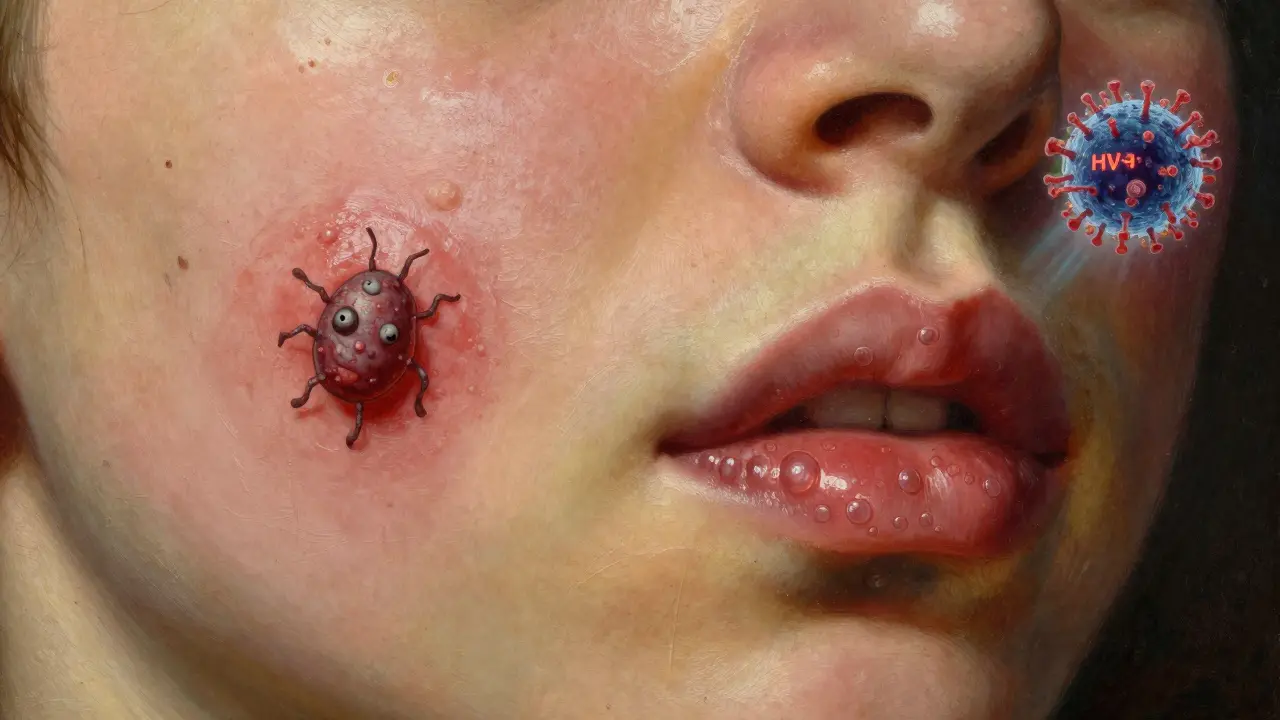
Using the wrong treatment can backfire. Applying acne cream to a cold sore? That can rupture blisters and spread the virus. Putting antiviral ointment on a pimple? It won’t help - and might dry out your skin.
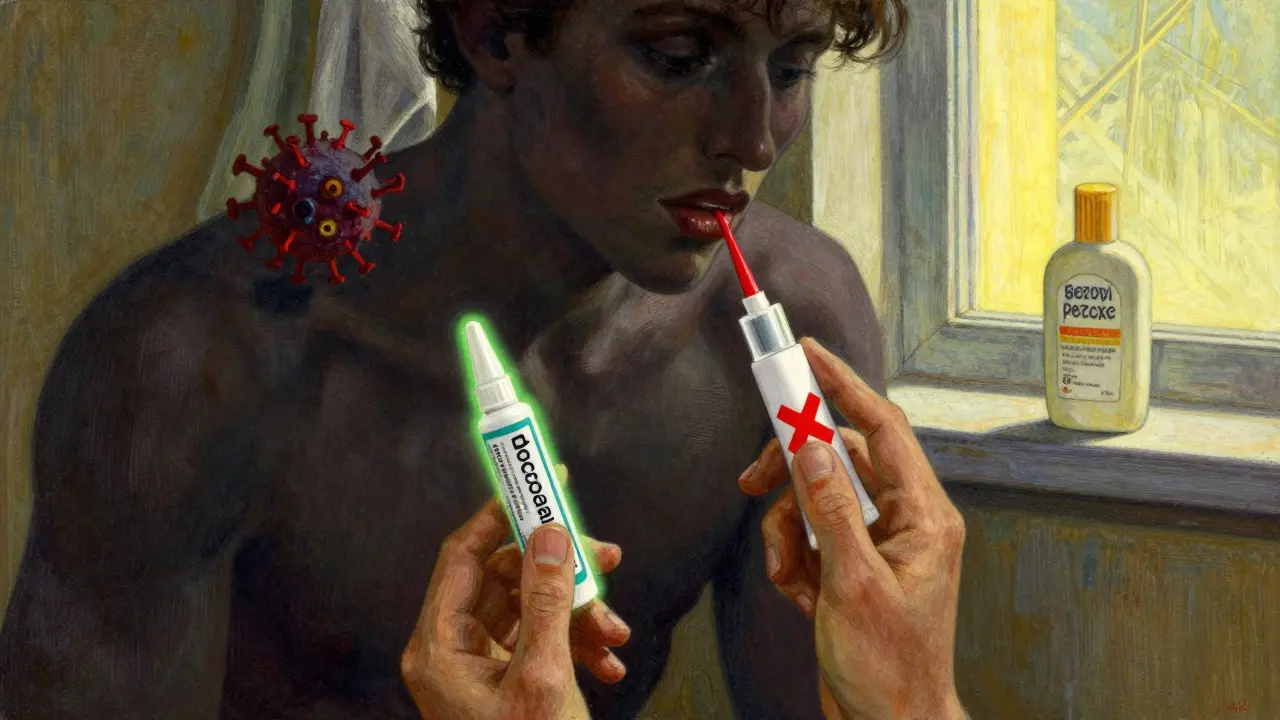
For cold sores: Time is critical. The moment you feel that tingling, start treatment. Prescription antivirals like acyclovir (Zovirax) or valacyclovir (Valtrex) can cut healing time by 1-2 days if taken early. Over-the-counter docosanol (Abreva) is the only FDA-approved OTC option - it reduces symptoms by about 50% if used 5 times a day for 4-5 days. Creams like penciclovir (Denavir) work best when applied every 2 hours during waking hours in the first 4 days.
Don’t use toothpaste, baking soda, or rubbing alcohol. These are old myths that dry out the skin, cause more pain, and delay healing.
For pimples: Focus on clearing pores and killing bacteria. Benzoyl peroxide (2.5-10%) is the gold standard - it kills C. acnes bacteria and reduces inflammation. Studies show it cuts inflammatory acne by 40-60% in 4 weeks. Salicylic acid (0.5-2%) helps exfoliate dead skin and unclog pores. Use it daily, not just on the spot.
Don’t pop pimples. It pushes bacteria deeper, causes scarring, and increases inflammation. Instead, use a warm compress to help it drain naturally.
What People Get Wrong (And How to Avoid It)
Survey data from dermatology forums shows how often people mess up:
- 68% of people mistake their first cold sore for a pimple - and pop it, spreading the virus.
- 72% of those who used alcohol-based acne spot treatments on cold sores ended up with more pain and longer healing.
- 41% of partners caught HSV-1 from sharing lip balm during an outbreak.
- People who recognized the tingling and started antivirals right away healed 30-50% faster.
Here’s how to avoid those mistakes:
- Don’t touch the sore. Wash your hands if you do.
- Use separate lip balm, toothbrush, and towels during an outbreak.
- Apply sunscreen to your lips daily - UV exposure triggers 32% of outbreaks.
- Manage stress. It’s a trigger in 28% of cases.
- For acne, stick to non-comedogenic products. Heavy creams and oils can clog pores.
When to See a Doctor
Most cold sores and pimples clear up on their own. But see a dermatologist if:
- Your cold sore lasts longer than 2 weeks.
- You get more than 3-4 outbreaks a year.
- The sore spreads to your eyes, nose, or fingers.
- Your pimple is huge, painful, and doesn’t improve with OTC treatments.
- You’re getting frequent breakouts on your chin or jaw - this might be hormonal acne needing prescription treatment.
For recurring cold sores, doctors may prescribe daily antivirals to suppress outbreaks. For stubborn acne, they might suggest retinoids, antibiotics, or even hormonal therapy.
What’s New in Treatment
Research is moving fast. In 2023, the FDA approved pritelivir an experimental antiviral that reduces viral shedding by 70% in trials. While not yet widely available, it’s a sign that better treatments are coming. For acne, new microbiome-friendly products are now targeting only the bad bacteria while preserving healthy skin flora - a big shift from harsh antibacterial creams.
Also, laser treatments for cold sore prevention are growing. About 20% more people are using them yearly to reduce outbreak frequency - though they’re still expensive and not covered by most insurance.
Bottom Line
Cold sores and pimples look alike, but they’re not the same. One is a viral infection. The other is a blocked pore. One spreads. The other doesn’t. One needs antivirals. The other needs acne treatments. If you’re unsure, wait for the signs: tingling means cold sore. No warning? Probably a pimple. Treat accordingly - and don’t guess. The right treatment starts with the right diagnosis.


Write a comment