
The Hidden Gap in Your Medicine Cabinet
You've probably felt that pang of disappointment when your doctor prescribes a medication that costs hundreds of dollars a month, telling you there's no cheaper alternative. Usually, when a brand-name patent expires, generic versions flood the market, dropping prices dramatically. But for a specific category of medicines, those savings never come. These are complex generic drugs, and they represent one of the most difficult hurdles in modern pharmacy. Even as patents expire, these critical treatments often remain the exclusive domain of brand manufacturers.
Why does this happen? Is it because generic companies don't want to make them? Actually, no. They want to, because the profit margins can still be significant. The issue lies in the science. A standard painkiller is easy to copy; its formula is straightforward. However, complex generic drugsare defined by sophisticated formulations, devices, or delivery mechanisms that make exact replication nearly impossible. If you think about an insulin pen, an inhaler, or a slow-release implant, copying that engineering while proving it behaves exactly like the original is like trying to reverse-engineer a luxury car engine without seeing the blueprints. This article unpacks exactly why the FDA(U.S. Food and Drug Administration) finds these approvals so much harder than regular ones.
What Exactly Defines a Complex Medication?
To understand the delay, we first need to define what makes a drug "complex." In the pharmaceutical world, not all copies are created equal. Traditional generics-like ibuprofen or acetaminophen-are small molecules. You can see them under a microscope, measure their purity easily, and know exactly how they interact with blood. Complex generics break that pattern. According to recent GDUFA II (Generic Drug User Fee Amendments II) reauthorization, complexity comes from several angles.
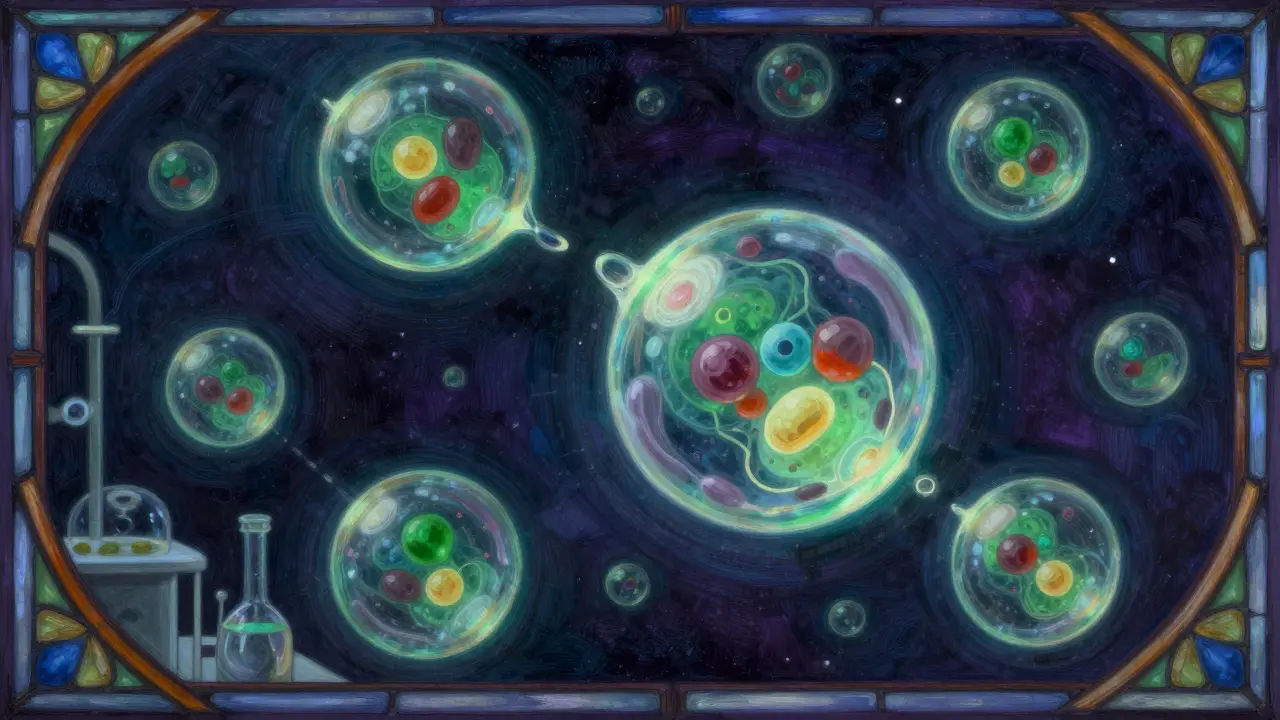
First, there are formulation challenges. Some drugs are delivered as liposomal formulations, which wrap the medicine in a fatty bubble to help it enter cells. Replicating the size and stability of that bubble is incredibly hard. Second, consider long-acting injectables. These release medicine over weeks or months. Proving the release profile matches the original requires months of testing, not days. Third, drug-device combinations like inhalers pose a risk. If a generic manufacturer makes the plastic mouthpiece slightly different, airflow changes. That change might alter where the medicine lands in the lungs, meaning the treatment fails even if the chemical ingredients are identical.
- Peptides and Proteins: Large biological molecules that are sensitive to temperature and storage.
- Lipid-Based Emulsions: Oil-in-water mixtures requiring precise particle sizes.
- Topical Products: Creams where the rate of absorption depends on the gel base.
- Inhalers and Pens: Hardware dependent delivery systems.
This classification matters because the tools used to prove safety for simple drugs simply don't work here. When you buy a generic aspirin, you trust it because the molecule is identical. With complex generics, the FDA needs to see evidence that the behavior of the product is identical.
The Science Behind the Approval Struggle
The biggest hurdle is proving bioequivalence. For a generic drug to be approved, the FDA must determine that it delivers the same amount of drug into the bloodstream over the same time as the brand name. We call this bioequivalence testing. With a simple pill, this is relatively straightforward. You give the pill to volunteers, draw blood, and compare the curves.
However, complex generics disrupt this model. Imagine a long-acting injection designed to last a year. If a volunteer takes it, drawing blood weekly creates a massive ethical and logistical burden, often extending studies into multiple years. Furthermore, for peptide-based drugs, the body might react to the protein structure itself, creating antibodies (immunogenicity). If the generic version triggers antibodies differently than the original, it could cause allergic reactions or lose effectiveness over time. Scientists describe this as a "characterization gap." They cannot fully measure every aspect of the reference drug because the original manufacturer guards those manufacturing secrets. The generic maker has to guess the parameters based on what is public knowledge.
| Metric | Traditional Generic | Complex Generic |
|---|---|---|
| Active Ingredient Size | Small Molecule | Large/Biological/Complex |
| Primary Hurdle | Chemical Matching | Bioequivalence Proof |
| Development Cost | $1-2 Million | $20-50 Million |
| Approval Time | 1-3 Years | 5-7 Years |
| Risk of Failure | Low | High |
Notice the cost difference? Developing a complex generic can take five times longer and cost twenty-five times more. This explains why companies hesitate. If a drug patent expiring in 2028 is worth millions to develop, but there is a 50% chance the FDA rejects it due to lack of clarity on the standards, that's a risky investment. It leads to a situation where the market stays monopolized by the brand owner, and patients continue paying premium prices.
Navigating Regulatory Pathways: ANDA and Beyond
Normally, a generic company submits an ANDA (Abbreviated New Drug Application)Standard application pathway for traditional generic drugs. This pathway relies on the fact that if the chemical composition is the same, the effects will be the same. It allows companies to skip the clinical trials the brand company originally ran. It's efficient. It saves lives and money. But for complex generics, the ANDA path is often blocked.
When a generic developer cannot match the complex product through chemistry alone, they sometimes have to switch to a 505(b)(2) application. This is a hybrid pathway. It acknowledges that some safety data exists, but requires the applicant to provide their own supporting clinical studies or justification. Essentially, you lose the "abbreviated" status. You have to prove the efficacy again. This shifts the project from a generic filing to something resembling a brand-new drug launch. It defeats the purpose of generics for many investors.
Recognizing this bottleneck, the FDA took action with GDUFA (Generic Drug User Fee Amendments). Since the implementation of GDUFA II in 2017, the agency has tried to clarify expectations. One major tool introduced is the Pre-ANDA Meeting Program. Before spending years on R&D, companies can ask the FDA: "Hey, this is our plan for testing. Does this meet your criteria?" By 2019, they had processed over 800 such meetings.
Another crucial initiative involves Product-Specific Guidances (PSGs). There were roughly 1,700 PSGs available by 2019. These documents tell generic makers specifically how to test a specific brand drug. Without a PSG, regulators say "we don't know yet," leaving applicants flying blind. As noted by experts in Drug Patent Watch, uncertainty drives innovation to zero. When regulations evolve continuously without clear anchors, companies choose safe bets: simple pills, not life-changing biologics.

Success Stories and Real-World Stakes
Is there any light at the end of the tunnel? Yes. Consider the case of bupivacaine liposome injectable. Approved in 2019, it was a landmark event. It proved that collaboration works. The FDA worked closely with the sponsor to design a unique bioequivalence approach that didn't require the usual exhaustive clinical studies. This victory shows the FDA is capable of solving the puzzle. However, looking at the numbers as of Q2 2023, only 15 complex generic products received approval since 2015 compared to over 1,000 conventional generics.
For patients, the impact is direct. If a cancer treatment or a rare disease therapy is complex, patients rely on one source. If that source stops making it, or raises prices, there is no backup. The Congressional Research Service notes that median review times were historically high-around 31 months in 2012-but improvements since then are vital. Yet, the backlog remains a concern for specialized medical fields.
Furthermore, international variations complicate things. If a manufacturer operates globally, they face different hurdles in China's NMPA versus Brazil's ANVISA. China often demands local legal agents and local testing, adding layers of bureaucracy. While US law aims to harmonize through ICH guidelines, the reality of logistics means that global rollout is slow.
Looking Ahead: Technology and Reform
We are entering a phase where technology might finally bridge the gap. Industry analysts suggest that Artificial Intelligence (AI) in drug development could reduce timelines by 20-30% by 2027. Machine learning models can predict how a formulation will behave, saving months of failed lab experiments. Similarly, Quality by Design (QbD) approaches focus on understanding the manufacturing process deeply rather than just testing the final batch.
Fresh data from the FDA's FY 2025 Generic Drug Science report emphasizes that developing efficient bioequivalence approaches remains a top priority. The agency plans to hire staff and update performance goals to keep review times near 10 months for submissions that are well-prepared. The goal is to transition from ad-hoc problem solving to standardized protocols. Until then, expect complex generics to remain a high-stakes arena. For now, knowing why they are hard helps us understand why the price tag hasn't dropped yet.
Why are some generic drugs significantly more expensive than others?
Complex generics require extensive research and development, often costing $20-50 million compared to a few million for standard drugs. Because the scientific barriers are higher, fewer competitors enter the market, reducing the price war that typically lowers costs.
What is the difference between ANDA and 505(b)(2)?
ANDA is for standard generic drugs relying on brand name safety data. 505(b)(2) is a hybrid pathway often needed for complex drugs where new clinical data or testing is required to prove safety and efficacy because the delivery system is too complex to copy directly.
Does the FDA have a timeline for approving complex generics?
While the FDA aims to review applications quickly, complex generics often face longer timelines due to scientific complexities. Recent goals target reviewing well-prepared applications within 10 months, though actual development by the manufacturer may take 5-7 years prior to submission.
How does the Patient Input Council affect approval?
Patient councils advise the FDA on which drugs are most needed. Their input helps prioritize resources, potentially moving urgent complex generics to the front of the line, although this mechanism is still being optimized to ensure faster action on priority medications.
Are complex generics safer than brand names?
Yes, once approved, a complex generic must demonstrate therapeutic equivalence to the reference listed drug. The rigorous standards ensure that efficacy and safety profiles match, though the path to that proof involves more rigorous testing than standard generics.
Write a comment