
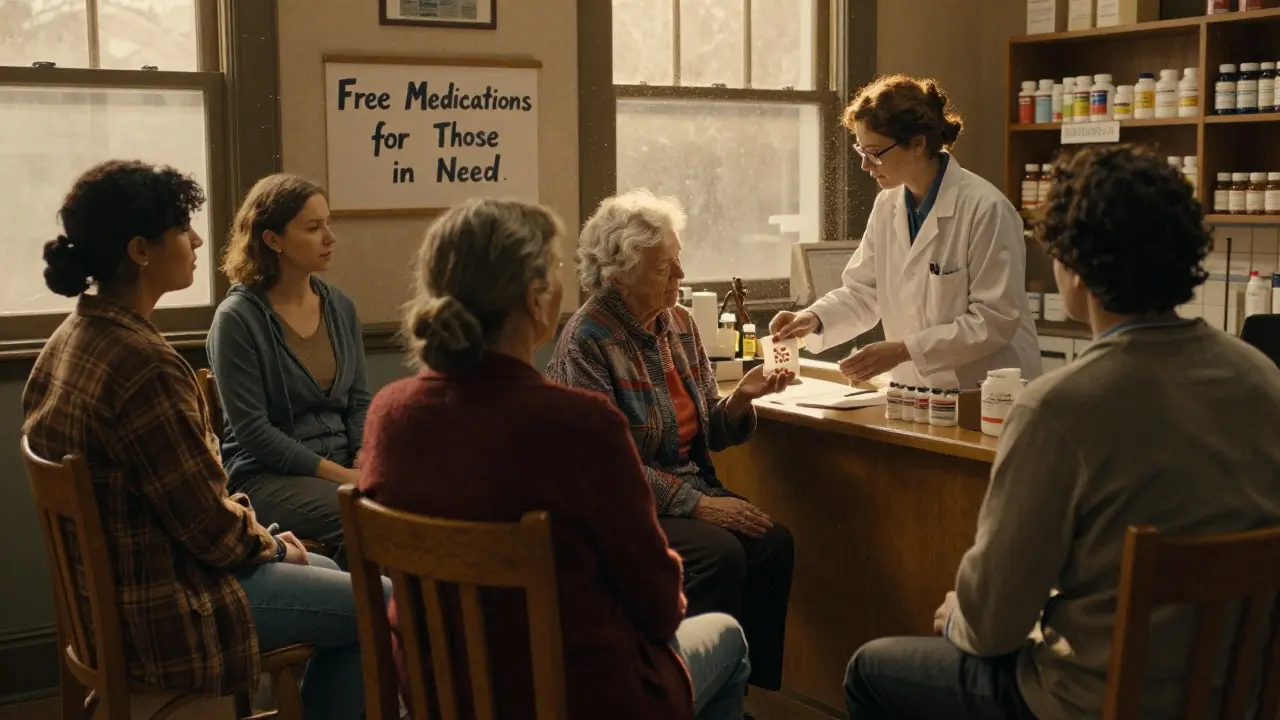
When you need medication but can’t afford it, the stress doesn’t just come from the illness-it comes from knowing you might have to skip doses, split pills, or go without. For millions of Americans, this isn’t hypothetical. Over 30 million people are uninsured, and even those with insurance often face copays and deductibles that make prescriptions unaffordable. The good news? Free and low-cost community clinics are out there, and they’re helping people get the medicines they need-no insurance required.
What Kind of Clinics Offer Free or Low-Cost Medications?
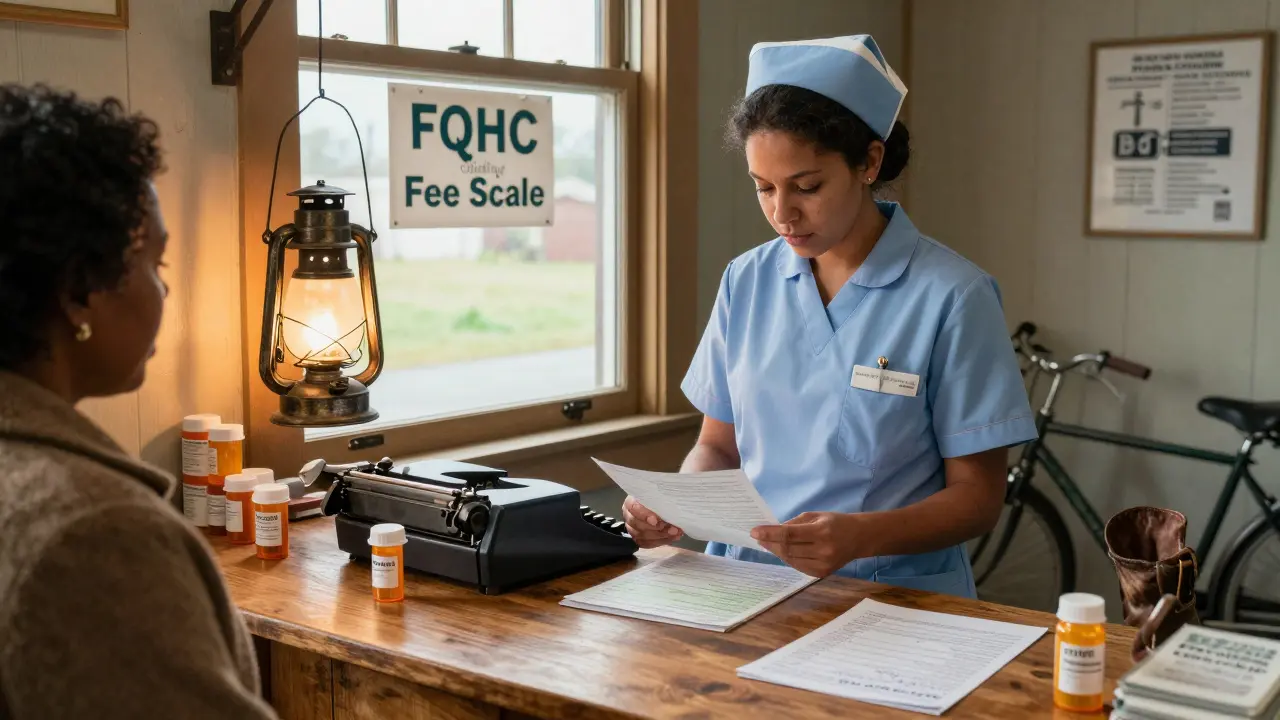
Not all clinics are the same. There are three main types that provide medication help: Federally Qualified Health Centers (FQHCs), free clinics, and specialized medication assistance programs.FQHCs are government-funded clinics that serve low-income communities. They don’t turn anyone away, even if you have no insurance. Instead, they use a sliding fee scale based on your income and family size. If you earn less than $29,160 as a single person (200% of the federal poverty level in 2023), you could pay as little as $20 for a visit-and your medications might cost just $5 to $10 per prescription. These clinics often have on-site pharmacies or partnerships with local drugstores to fill prescriptions at reduced prices.
Free clinics are different. They’re usually run by volunteers and nonprofit groups. Most serve only people who are completely uninsured and earn under 200% of the federal poverty level. Medications here are often completely free. You won’t pay a dime for insulin, blood pressure pills, or asthma inhalers-if you qualify. But they’re not open every day. Many operate just one or two evenings a week. Wait times can be long-4 to 6 weeks for a first appointment in some areas.
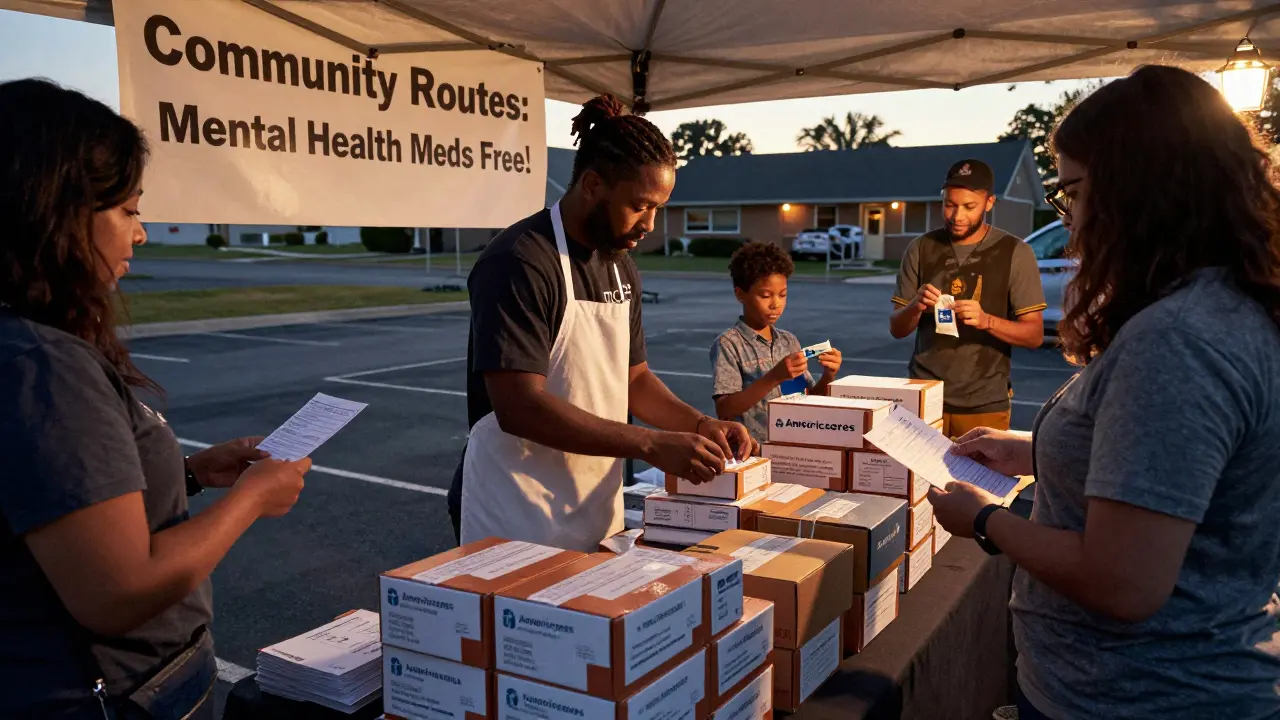
Specialized programs like Community Routes: Access to Mental Health Care focus on one thing: mental health meds. Backed by Direct Relief, the National Association of Free & Charitable Clinics, and Teva Pharmaceuticals, this program gives $75,000 grants to clinics in states like California, Florida, and New Jersey so they can stock free antidepressants and anti-anxiety medications. It’s one of the few programs targeting mental health specifically-and it’s expanding.
How Do These Clinics Get the Medications?
You might wonder: where do all these free drugs come from? The answer is mostly donations.Pharmaceutical companies donate millions of dollars’ worth of unused or overstocked medications every year. Americares, one of the largest nonprofit distributors, gave $190 million in medicine and supplies to nearly 1,000 clinics in 2023. These aren’t expired or low-quality drugs-they’re brand-name and generic medications, sealed and FDA-approved, donated directly by companies like Pfizer, Merck, and Eli Lilly.
Clinics don’t buy these drugs. They apply to programs like Americares’ Patient Assistance Program. Once approved, they receive shipments of medications tailored to their patients’ most common needs: diabetes, hypertension, asthma, and mental health conditions. Some clinics even have their own in-house pharmacies where volunteers sort, label, and distribute pills.
Other clinics partner with pharmaceutical company patient assistance programs directly. If you’re prescribed a brand-name drug like Humira or Lyrica, the clinic can help you apply for the manufacturer’s free medication program. They’ll fill out the paperwork, verify your income, and send it in. If approved, the drug is shipped directly to you-or to the clinic for pickup.
Who Qualifies for Free or Low-Cost Medications?
Eligibility is simple but strict. You must meet three basic criteria:- You’re uninsured or underinsured (your insurance doesn’t cover prescriptions, or your copays are too high)
- Your income is below 200% of the federal poverty level ($29,160 for one person, $39,420 for two, $59,760 for a family of four in 2023)
- You live in the clinic’s service area
Even if you have a job, you might still qualify. The AAFP Foundation found that most patients at free clinics are working adults-cashiers, warehouse workers, home health aides-who earn too much for Medicaid but too little to afford their prescriptions.
You’ll need to bring proof:
- Recent pay stubs or tax returns
- A government-issued ID (driver’s license, state ID, passport)
- Utility bill or lease agreement to prove residency
- Current prescription bottles or a list of your meds
Some clinics ask you to fill out a simple application form. Others do a quick interview with a nurse or social worker. Don’t be intimidated. They’ve seen this a thousand times. Their goal isn’t to judge you-it’s to get you the meds you need.
Where to Find These Clinics Near You
Finding a clinic isn’t hard if you know where to look.Start with the National Association of Free & Charitable Clinics (NAFC) website: nafcclinics.org. Their directory lets you search by state and shows which clinics offer medication assistance. Each listing includes hours, services, and contact info.
For FQHCs, use the HRSA Find a Health Center tool: findahealthcenter.hrsa.gov. This is the official government database. You can filter by sliding fee scale, language services, and whether they offer pharmacy services.
Many states have their own networks too. In Virginia, for example, the Virginia Association of Free & Charitable Clinics lists all 42 member clinics with details on whether they have an in-house pharmacy or help with prescription applications.
If you’re looking for mental health meds specifically, check if your state is part of the Community Routes program. It’s active in California, Florida, New Jersey, and seven other states as of 2025. The NAFC website has a map showing which clinics are part of it.
Don’t forget local hospitals. Many have community outreach offices that can connect you to free clinics. Call their patient services line and ask: “Do you know which free clinics in the area help with medications?”
What Medications Are Usually Available?
Free clinics don’t carry every drug under the sun. They focus on the most common and critical conditions:- Diabetes: Metformin, insulin (including Humalog and Lantus)
- High blood pressure: Lisinopril, amlodipine, hydrochlorothiazide
- Asthma: Albuterol inhalers, fluticasone
- Cholesterol: Atorvastatin, simvastatin
- Mental health: Sertraline, fluoxetine, citalopram, lorazepam
- Infections: Antibiotics like amoxicillin, doxycycline
Brand-name drugs are rare, but generics are everywhere. And they work just as well. A 30-day supply of metformin that costs $150 at a retail pharmacy might be free at a clinic. Same with lisinopril-often $40 at Walmart, free at a community clinic.
Some clinics are starting to offer more complex meds-like those for hepatitis C or rheumatoid arthritis-but availability varies. If you need something rare, the clinic staff will help you apply for the manufacturer’s patient assistance program.
What to Expect When You Go
Your first visit might feel overwhelming, but it doesn’t have to be.Most clinics operate on a walk-in basis for first-time patients, but appointments are preferred. Bring everything you need: ID, income proof, meds list. You’ll fill out a form, meet with a nurse to review your health history, and then be seen by a doctor or PA. If you need a prescription, they’ll write it-and then help you get it for free.
At free clinics, you might wait a few hours. At FQHCs, wait times are shorter, but you’ll still need to schedule ahead. Don’t be surprised if they ask you to come back in a week to pick up your meds. Many clinics don’t keep a full pharmacy on-site. They order meds in bulk and distribute them on specific days.
Some clinics even offer medication counseling. A pharmacist or trained volunteer will explain how to take your pills, warn you about side effects, and help you set up a pill organizer. That’s not just free-it’s priceless.
Why These Clinics Are More Important Than Ever
Demand is rising. The AAFP Foundation says most patients now come from working households. Inflation, stagnant wages, and rising drug prices have pushed more people into the gap between insurance and affordability.But the system is stretched thin. In NAFC’s 2022 survey, 42% of clinics reported medication shortages. Volunteers are aging. Funding is unpredictable. One clinic in rural Iowa shut down last year because its main donor retired.
That’s why your support matters-even if you’re not the one needing help. Volunteer. Donate unused meds (check with the clinic first-some accept sealed, unopened prescriptions). Advocate for policies that expand funding. These clinics aren’t just a Band-Aid. They’re a lifeline.
What If You Don’t Qualify?
If your income is too high for free clinics but you still can’t afford your meds, don’t give up.Some pharmaceutical companies offer patient assistance programs even if you have insurance-especially if your plan has a high deductible. Ask your pharmacist or doctor for the name of the program. They can help you apply.
Also check out NeedyMeds.org. It’s a free, nonprofit database that lists hundreds of patient assistance programs, discount cards, and coupon options for brand-name and generic drugs. You can search by medication name and see exactly how much you’ll save.
And if you’re on Medicare Part D, you might qualify for Extra Help-a federal program that lowers your monthly premiums and copays. Call 1-800-MEDICARE or visit medicare.gov to apply.
You’re not alone. Millions are in the same boat. The system isn’t perfect-but there are ways through it. Start with one clinic. One phone call. One application. It’s enough to get you started.
Can I get free medications if I have insurance?
Yes, if your insurance doesn’t cover your prescriptions or your copays are too high. Many free clinics serve underinsured patients-those who have insurance but still can’t afford their meds. You’ll need to show proof of your out-of-pocket costs, like recent pharmacy receipts. FQHCs also use sliding scales that consider your total financial situation, not just insurance status.
Do free clinics give brand-name drugs?
Rarely. Most clinics stock generic versions because they’re cheaper and just as effective. But if you need a brand-name drug-like a biologic for rheumatoid arthritis-the clinic can help you apply for the manufacturer’s free medication program. These programs often provide brand-name drugs at no cost to qualifying patients.
How long does it take to get meds from a free clinic?
It varies. Some clinics have on-site pharmacies and can give you your meds the same day. Others order in bulk and distribute on set days-sometimes weekly or biweekly. Wait times for your first appointment can be 4 to 6 weeks. If you need urgent meds, ask if the clinic has an emergency supply or can connect you with a local pharmacy that offers low-cost generics.
Can I get mental health medications for free?
Yes, and it’s becoming more common. Programs like Community Routes: Access to Mental Health Care are expanding across the U.S., providing free antidepressants and anti-anxiety meds to clinics in 10+ states. Even if your clinic isn’t part of that program, many still offer generic SSRIs like sertraline and fluoxetine for free or at a minimal cost.
Are free clinic medications safe?
Absolutely. All medications come from licensed pharmaceutical donors and are stored and distributed under FDA guidelines. Americares, the largest distributor, is licensed to handle prescription drugs in all 50 states. These aren’t expired or counterfeit drugs-they’re the same medications you’d get from a pharmacy, just donated.
Can I volunteer to help these clinics?
Yes. Most clinics need volunteers for everything from sorting meds to helping patients fill out forms. You don’t need to be a doctor. Even a few hours a month can make a big difference. Visit nafcclinics.org and search for clinics near you-most list volunteer opportunities on their pages.


Write a comment