

When the temperature climbs, most people think about drinking more water, staying in the shade, or wearing light clothes. But for people taking diuretics or anticholinergics, heat isn’t just uncomfortable-it can be life-threatening. These medications, commonly prescribed for high blood pressure, heart failure, overactive bladder, and depression, interfere with the body’s ability to cool itself. And when summer heat hits, the risks aren’t theoretical. They’re real, measurable, and often overlooked.
How Diuretics Make Heat Dangerous
Diuretics-often called water pills-help your body get rid of extra fluid. That’s why they’re used for high blood pressure and heart failure. Common ones include furosemide (Lasix), hydrochlorothiazide (Microzide), and chlorthalidone (Hygroton). But here’s the catch: they also make you lose more water and salt through urine. When it’s hot, you’re already sweating. Add diuretics into the mix, and your body can’t keep up.
During extreme heat, sweat loss can hit 1-2 liters per hour. Diuretics push your kidneys to keep flushing out fluid, even when your body needs every drop. This leads to low blood volume, low sodium, and low potassium. The result? Dizziness, muscle cramps, rapid heartbeat, and in severe cases, heat stroke or cardiac arrest. A 2022 study of 1.2 million Medicare patients found that those on loop diuretics had a 37% higher chance of being hospitalized for heat-related illness-even when temperatures were only around 80°F (26.7°C), well below what most people consider a heatwave.
Doctors often tell patients with heart failure to limit fluids. But in a heatwave, that advice can backfire. The CDC recommends temporarily adjusting fluid restrictions during extreme heat. That means drinking more water, even if you’re on a diuretic. It’s not about ignoring your doctor’s instructions-it’s about adapting them to the weather.
Why Anticholinergics Block Your Body’s Cooling System
Anticholinergics work by blocking a chemical called acetylcholine. That’s helpful for conditions like overactive bladder (oxybutynin, tolterodine), Parkinson’s, or depression (amitriptyline). But acetylcholine also tells your sweat glands to activate. When it’s blocked, you don’t sweat-or you sweat much less.
That’s a problem because sweating is your body’s main way of cooling down. Studies show that strong anticholinergics (with an Anticholinergic Burden Score of 3) can reduce sweating by 30-50%. In one experiment, people on these drugs couldn’t lower their core body temperature during heat stress. Their skin stayed dry, their core temperature kept rising, and their risk of heat illness shot up.
And here’s the silent danger: anticholinergics can also cause confusion, drowsiness, or memory problems. So if you start feeling dizzy or disoriented during heat exposure, you might not realize it’s heat illness. You might just think, “I’m tired” or “My meds are making me foggy.” That delay can be deadly.
The Perfect Storm: When Medications Combine
Most people don’t take just one of these drugs. Older adults often take multiple prescriptions. A 75-year-old might be on hydrochlorothiazide for blood pressure, oxybutynin for bladder control, and amitriptyline for nerve pain. Each one chips away at the body’s ability to handle heat. Together, they create a perfect storm.
During the 2021 Pacific Northwest heat dome, 91% of the 800+ heat-related deaths involved people taking at least one medication that interfered with heat regulation. Diuretics and anticholinergics made up 63% of those cases. These weren’t outliers. They were people doing everything “right”-taking their meds, staying indoors, avoiding the sun. But their bodies couldn’t cool down, no matter what they did.
It’s not just about the drug itself. It’s about the combination. A diuretic lowers your blood volume. An anticholinergic stops you from sweating. A beta-blocker slows your heart rate, making it harder to pump blood to your skin. Add them together, and your body’s cooling system collapses.
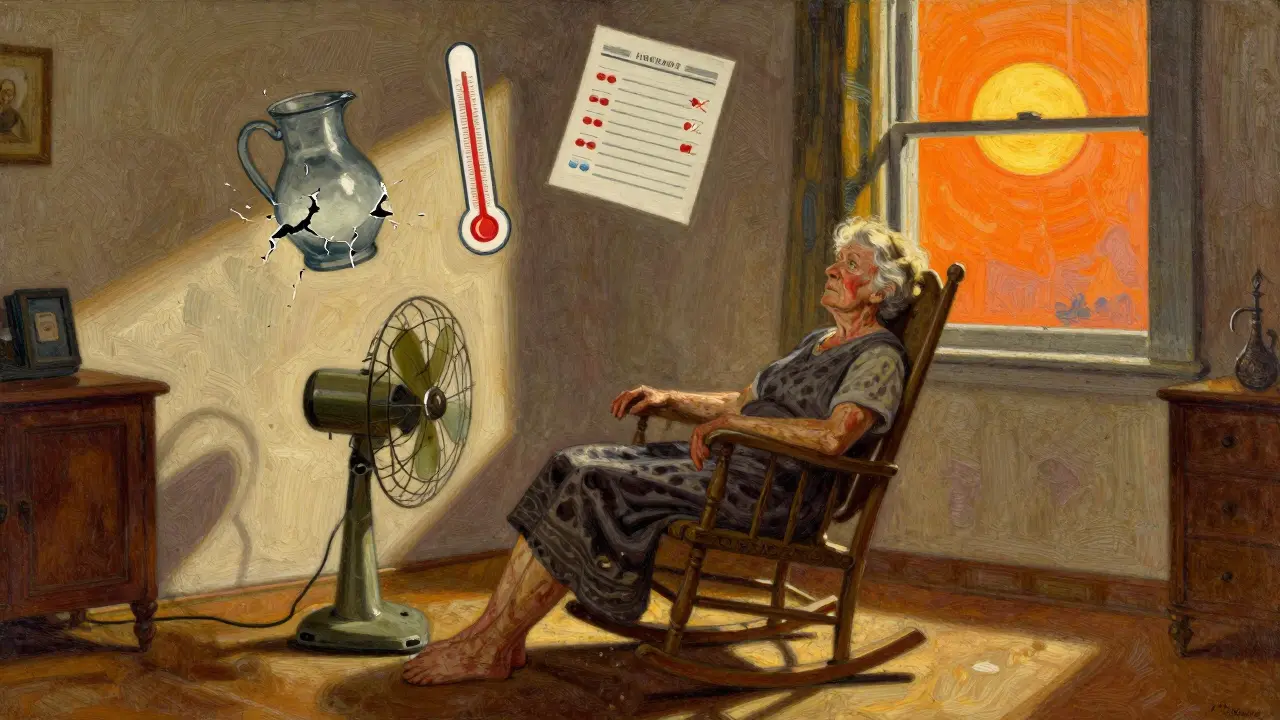
What You Can Do: Practical Heat Safety Steps
You don’t have to stop your meds. But you do need to adjust how you live during hot weather. Here’s what actually works:
- Drink water-even if you’re on a fluid restriction. Talk to your doctor about whether you can safely increase your intake during heatwaves. Don’t wait until you’re thirsty. Sip water throughout the day.
- Check your sweat. If you’re on anticholinergics and notice you’re not sweating even when it’s hot, that’s a red flag. Your body isn’t cooling. Get indoors, cool down, and call your doctor if you feel off.
- Wear the right clothes. Light-colored, loose, breathable fabrics help. Even if you’re not sweating much, air movement over your skin helps with passive cooling.
- Avoid the sun during peak hours. 10 a.m. to 4 p.m. is the danger zone. Stay indoors or in shaded areas. Use a wide-brimmed hat and sunscreen-many anticholinergics also make your skin more sensitive to UV rays.
- Use a buddy system. If you’re older or on anticholinergics, ask someone to check on you twice a day during heat events. A text, a call, or even a quick visit can catch early signs of trouble before it becomes an emergency.
- Know the warning signs. Headache, nausea, confusion, rapid pulse, dry skin, or muscle cramps aren’t just “feeling under the weather.” They’re signs your body is overheating. Don’t wait for collapse. Act fast.
When to Call for Help
Heat illness can escalate quickly. If you or someone you know is taking these medications and shows any of these symptoms, seek medical help immediately:
- Body temperature above 103°F (39.4°C)
- Confusion, slurred speech, or loss of consciousness
- Seizures
- Hot, dry skin with no sweating
- Rapid, weak pulse or shallow breathing
Call emergency services. Don’t wait. Don’t assume it’s just “heat exhaustion.” With these medications, heat exhaustion can turn into heat stroke in under an hour.
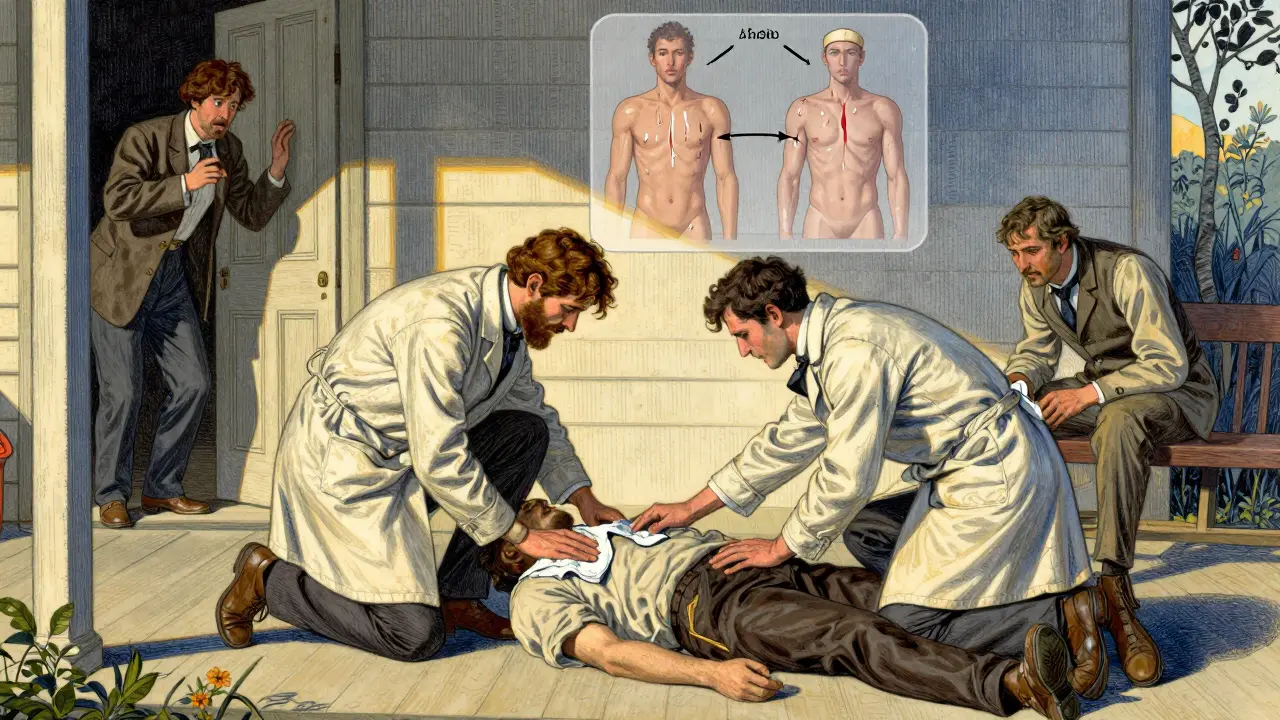
Don’t Stop Your Medication-Talk to Your Doctor
Some people think the solution is to skip their diuretic or anticholinergic during hot weather. That’s dangerous. Stopping your meds can cause blood pressure spikes, fluid buildup in the lungs, or worsening bladder control. The risks of stopping are often worse than the risks of heat.
Instead, talk to your doctor before the heat arrives. Ask:
- Is my medication known to affect heat tolerance?
- Should I adjust my dose during summer?
- Are there alternatives with lower anticholinergic burden?
- Do I need a plan for hot days?
A 2022 pilot study at Massachusetts General Hospital found that 42% of heart failure patients on diuretics needed temporary dose reductions during a summer heatwave. Those adjustments were made under medical supervision-and they prevented hospitalizations.
The Bigger Picture: Climate Change and Medication Risks
Extreme heat isn’t going away. The number of days above 90°F (32.2°C) in the U.S. has increased by 47% since 1970. By 2030, heat-related deaths could double in some areas. And as more people live longer with chronic conditions, more will be on medications that make heat more dangerous.
Public health systems are starting to catch up. The CDC’s Heat and Health Tracking System now collects data on medication use in heat-related emergencies. Researchers at Penn State and the National Institute on Aging are studying how specific drugs affect older adults in real heat conditions. Their work will help doctors give better advice.
But right now, the responsibility falls on you and your care team. Don’t wait for a heatwave to think about this. Talk to your doctor now. Make a plan. Know your risks. Stay hydrated. Stay cool. Your life might depend on it.
Can I stop taking my diuretic during a heatwave to avoid dehydration?
No. Stopping your diuretic without medical supervision can cause dangerous fluid buildup, high blood pressure, or heart failure worsening. Instead, talk to your doctor about adjusting your dose or fluid intake during hot weather. Never change your medication on your own.
Do all anticholinergics stop you from sweating?
No. Only those with a high Anticholinergic Burden Score (ACB = 3) strongly suppress sweating. Common ones include oxybutynin, tolterodine, and amitriptyline. Medications with lower scores (ACB ≤ 2), like some newer bladder drugs, have much less effect. Ask your pharmacist or doctor to check your medication’s ACB score.
Is it safe to use a fan if I’m on anticholinergics?
Yes. Fans help even if you’re not sweating much. They move air over your skin, helping your body lose heat through convection and radiation. But fans alone won’t prevent heat illness if the air is too hot (above 95°F). Combine them with air conditioning, cool showers, or damp cloths on your neck and wrists for better cooling.
What drinks should I avoid when taking diuretics in hot weather?
Avoid alcohol, caffeine, and sugary sodas. Alcohol and caffeine are mild diuretics themselves-they make you lose more fluid. Sugary drinks don’t hydrate as well as water and can spike blood sugar. Stick to water, oral rehydration solutions, or low-sodium broths. If you’re on a low-sodium diet, ask your doctor if you need a small amount of salt during extreme heat.
Are there safer alternatives to anticholinergics for overactive bladder?
Yes. Newer options like mirabegron (Myrbetriq) work differently and don’t block acetylcholine. Beta-3 agonists don’t cause dry mouth or reduced sweating. If you’re on an anticholinergic for bladder control and live in a hot climate, ask your doctor if switching to mirabegron or a similar drug is an option. It may reduce your heat risk without losing symptom control.
How can I tell if my symptoms are from heat or my medication?
It’s often both. Dizziness, confusion, and fatigue can come from dehydration (from diuretics), lack of sweating (from anticholinergics), or the medication’s side effects. The key is timing: if symptoms start or worsen when it’s hot, heat is likely a trigger. Keep a log: note the temperature, your symptoms, and what meds you took. Bring it to your doctor. That pattern helps them decide if adjustments are needed.


Write a comment