

Birth Control Supplement Interaction Checker
Check Supplement Risks
Select any supplements you're taking. This tool identifies potential interactions with hormonal birth control.
Your Results
Many women take herbal supplements to support energy, mood, or hormonal balance-often without realizing they might be making their birth control less effective. It’s not a myth. It’s not rare. And it’s not always obvious. If you’re on the pill, patch, or ring, and you’re also popping a bottle of St. John’s wort, grapefruit extract, or even activated charcoal, you could be at risk for unintended pregnancy. The science is clear: some herbal supplements directly interfere with how birth control works in your body.
St. John’s Wort Is the Biggest Risk
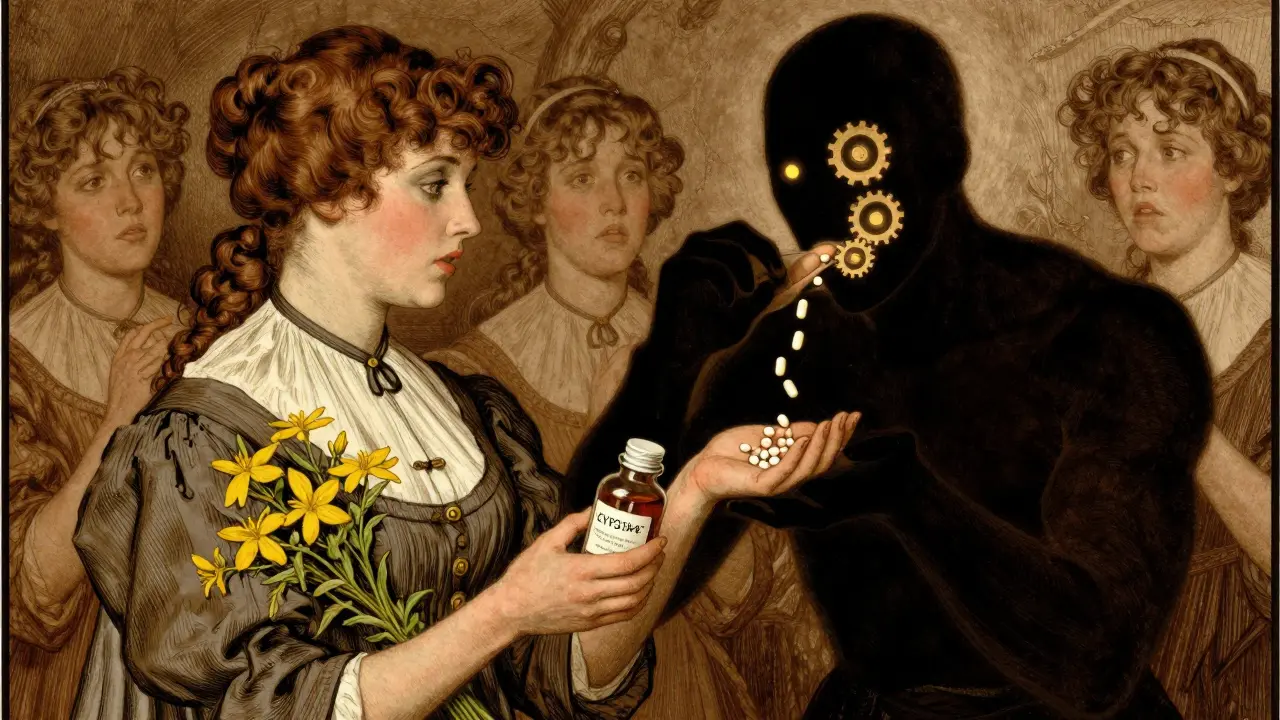
Of all the herbal supplements out there, St. John’s wort is the one with the most solid evidence showing it can break down birth control hormones before your body even gets a chance to use them. It’s not just a theory-studies have shown that women taking St. John’s wort along with a standard combined oral contraceptive (30 mcg ethinyl estradiol and 150 mcg levonorgestrel) had hormone levels drop by up to 25%. That’s enough to cause breakthrough bleeding, spotting, and, in some cases, full contraceptive failure.
How does it happen? St. John’s wort contains a compound called hyperforin. This compound turns on a system in your liver called the CYP3A4 enzyme. Think of this enzyme as a factory worker that breaks down drugs. When it’s turned on too hard, it starts chewing up the estrogen and progestin in your birth control before they can do their job. The same enzyme is triggered by prescription drugs like rifampin, which is why doctors warn against mixing those with birth control too. But unlike prescription meds, herbal supplements like St. John’s wort aren’t regulated for potency or consistency. One bottle might have enough hyperforin to cause problems. The next might not.
One study found that 23% of women using St. John’s wort with birth control had breakthrough bleeding, compared to just 5% in the control group. That’s not just a side effect-it’s a red flag that your hormones aren’t staying at the levels needed to prevent ovulation.
Other Supplements That Can Interfere
St. John’s wort isn’t the only culprit. Several other herbal products have shown potential to mess with birth control, though the evidence isn’t as strong.
- Grapefruit juice and grapefruit extract can interfere with how your body absorbs and breaks down hormones. The effect isn’t always predictable-it can make levels go up or down depending on your genetics and how much you consume. If you drink grapefruit juice daily, talk to your doctor.
- Activated charcoal is marketed for detox and bloating. But if you take it within four hours of your birth control pill, it can physically bind to the hormones and pull them out of your system before they’re absorbed. One study showed it can reduce hormone absorption by up to 30%.
- Soy isoflavones (found in soy supplements and some protein powders) don’t break down hormones like St. John’s wort does. Instead, they compete for estrogen receptors. This doesn’t make birth control useless, but it might weaken its effect, especially if you’re taking high doses regularly.
- Saw palmetto, alfalfa, and flaxseed have been flagged in case reports and small studies. The mechanisms aren’t fully understood, but they may affect hormone metabolism or liver enzymes. Until more research is done, caution is wise.
Supplements That Are Probably Safe
Not all supplements are risky. Many common ones don’t interact with birth control at all.
- Ashwagandha: A 2015 study found no effect on the liver enzymes that break down birth control hormones. It’s likely safe, though high doses might cause digestive upset, which could indirectly affect absorption.
- Probiotics: No evidence of interaction. They work in your gut, not your liver, and don’t affect hormone metabolism.
- Melatonin: Doesn’t interfere with how birth control works. But birth control can make melatonin stick around longer in your body, which might increase drowsiness or headaches.
- Vitamin D, B-complex, magnesium: These basic vitamins and minerals don’t interact with hormonal contraceptives.
What About DIM and Vitex?
Two supplements come up often in women’s health circles: DIM (diindolylmethane) and Vitex (chasteberry).
DIM is derived from cruciferous vegetables and is used to support estrogen balance. At low doses (50-100 mg), there’s no evidence it affects birth control. But at high doses (600 mg+), it may push your body to break down estrogen faster. If you’re taking DIM at those levels, you should talk to your doctor. It’s not a guaranteed problem-but it’s a risk worth discussing.
Vitex is often used to regulate cycles or reduce PMS. Some experts say it’s safe to take with birth control, and it might even help with hormonal side effects. There’s no strong evidence it reduces contraceptive effectiveness. But because it affects prolactin and other hormones, it’s still best to check with your provider before combining them.
Why This Is So Hard to Track
Here’s the problem: herbal supplements aren’t drugs. They’re sold as “dietary supplements,” which means they don’t need FDA approval before hitting shelves. Manufacturers don’t have to prove they work. They don’t have to test them for interactions. And batch-to-batch consistency? Often nonexistent.
A bottle labeled “St. John’s wort 300 mg” might contain anywhere from 0.1% to 0.8% hyperforin. That’s a 8-fold difference in potency. One woman might take it and be fine. Another might get pregnant. No one knows why-because no one tested it.
Compare that to prescription medications. Every drug you get from a pharmacy has been studied for interactions. The label tells you what to avoid. Supplements? No such luck.
What Should You Do?
If you’re on hormonal birth control and thinking about starting a supplement, here’s what to do:
- Don’t assume it’s safe. Just because it’s “natural” doesn’t mean it won’t interfere.
- Check the label. Look for St. John’s wort, grapefruit, activated charcoal, or high-dose soy. If you see any of these, pause.
- Talk to your doctor or pharmacist. Bring your supplement bottle with you. Even if you think it’s harmless, they can check for hidden interactions.
- Use backup contraception. If you’re taking St. John’s wort, use condoms or another non-hormonal method while taking it-and for at least one month after you stop.
- Track your body. Unusual spotting, missed periods, or cramping that feels different? It could be your birth control failing.
The Bottom Line
Most herbal supplements won’t touch your birth control. But a few-especially St. John’s wort-can seriously reduce its effectiveness. You don’t need to avoid all supplements. You just need to be smart about which ones you take.
Birth control is one of the most reliable forms of contraception when used correctly. But that reliability drops fast when you mix it with the wrong herb. The risk isn’t theoretical. It’s documented. It’s real. And it’s preventable.
If you’re unsure, ask. Always. Your body, your birth control, your choice-but make that choice with full information.
Can St. John’s wort really make birth control fail?
Yes. Multiple clinical studies have shown that St. John’s wort significantly lowers levels of estrogen and progestin in women taking combined oral contraceptives. This can lead to breakthrough bleeding and, in some cases, unintended pregnancy. The interaction is strong enough that medical guidelines recommend using a backup form of birth control while taking St. John’s wort-and for one month after stopping it.
Is grapefruit juice dangerous with birth control?
It can be. Grapefruit juice affects enzymes in your liver and gut that process birth control hormones. It can either increase or decrease hormone levels unpredictably. If you drink grapefruit juice daily, talk to your doctor. Occasional small amounts are usually fine, but regular consumption increases risk.
Do probiotics affect birth control?
No. Probiotics work in your digestive tract and don’t interfere with how your liver metabolizes birth control hormones. There’s no evidence they reduce contraceptive effectiveness. You can safely take probiotics while on the pill.
Is ashwagandha safe with birth control?
Yes, based on current evidence. A 2015 study found ashwagandha doesn’t affect the liver enzymes that break down birth control hormones. It’s considered low-risk. However, high doses may cause stomach upset, which could indirectly affect absorption. Stick to standard doses (300-600 mg daily) and monitor for side effects.
Should I stop taking supplements if I’m on birth control?
Not necessarily. Most supplements are safe. But you should never start a new one without checking for interactions. Always tell your doctor what you’re taking-even if it’s “just a herbal tea.” Birth control is powerful medicine, and even natural products can change how it works.
What if I already took St. John’s wort with my birth control?
If you’ve taken St. John’s wort for more than a few days, assume your birth control may not have worked properly. Use condoms for at least one month after stopping the supplement. If you had unprotected sex during that time, consider emergency contraception and take a pregnancy test if your period is late. Don’t wait.


Write a comment