

Many new mothers worry: Can I take my medication and still breastfeed safely? The answer is usually yes-98% of medications are safe to use while nursing, according to the American Academy of Pediatrics. But timing matters. A single pill taken at the wrong hour can expose your baby to more drug than necessary. The good news? You don’t have to stop breastfeeding. You just need to know when to take your medicine.
Why Timing Matters
Medications don’t flood into breast milk all at once. They follow your body’s rhythm. After you swallow a pill, it enters your bloodstream, peaks in concentration, then slowly drops. Breast milk mirrors that curve. The highest drug levels in milk happen right after your blood levels peak. That’s why timing your dose around feedings can cut your baby’s exposure by half-or more. For example, if you take oxycodone for pain, it hits its highest level in your blood within 30 minutes to 2 hours. If you breastfeed right after, your baby gets the strongest dose. But if you feed right before taking the pill, your baby gets milk with almost no drug in it. By the time your milk refills, the drug level has dropped significantly.How to Time Doses: The Basic Rule
The simplest, most effective strategy for most medications is this: breastfeed right before you take your dose. This works because:- Your baby gets milk with low or no drug concentration
- Your body has time to process and clear the drug before the next feeding
- Drug levels in milk stay low during the next several hours
What If You Need Multiple Doses a Day?
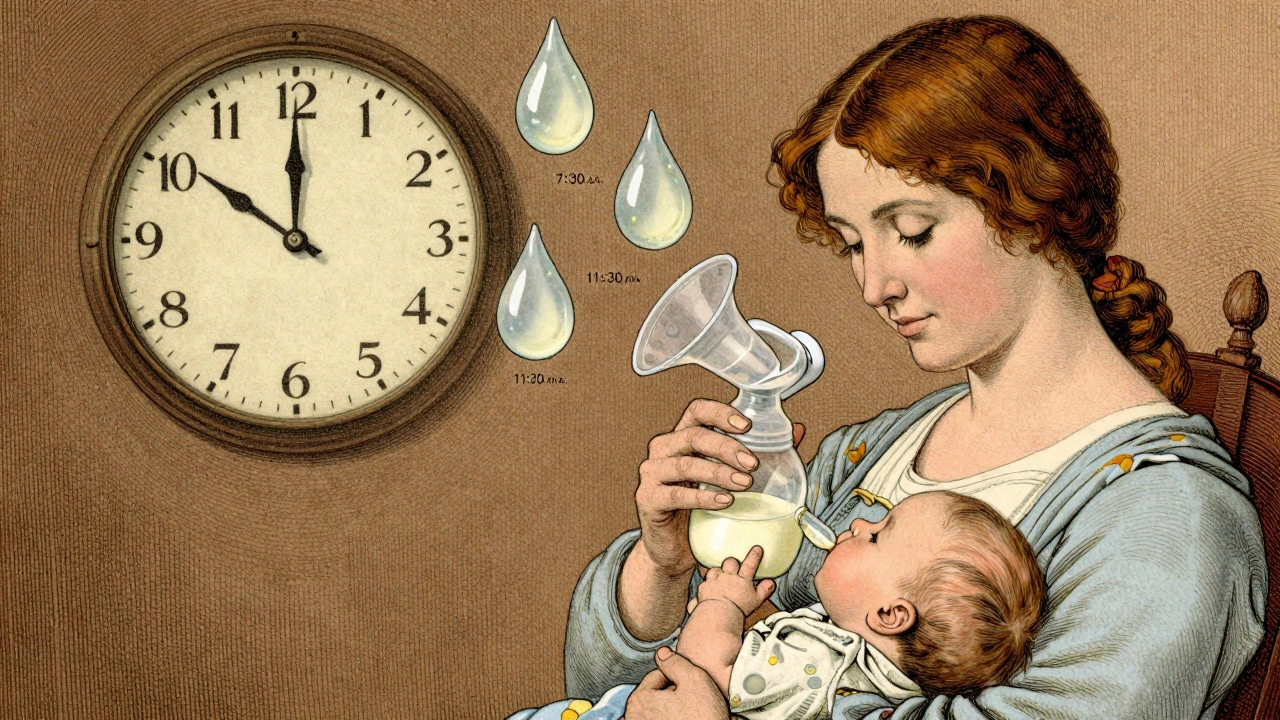
If you’re on a twice- or three-times-daily schedule, stick to the same rule: feed first, then take your pill. Space your doses evenly across the day. Avoid taking a dose right before a feeding, even if you’re tired or stressed. For example, if you take a medication three times a day-at 8 a.m., 4 p.m., and midnight-you’d feed your baby at 7:30 a.m., 3:30 p.m., and 11:30 p.m. That gives your body time to clear the drug before the next feeding. Even if your baby wakes up early, try to wait at least 30 minutes after feeding before taking your pill.Short-Acting vs. Long-Acting Medications
Not all drugs behave the same. The key difference is half-life-the time it takes for half the drug to leave your body. Short-acting drugs (half-life under 6 hours):- Hydrocodone: peaks in 1-2 hours, half-life 3-4 hours
- Oxycodone: peaks in 0.5-2 hours, half-life 3-4 hours
- Alprazolam (immediate-release): peaks in 1-2 hours, half-life 11 hours
- Prednisone: peaks in 1-2 hours, half-life 2-3 hours
- Diazepam: peaks in 0.3-2.5 hours, half-life 44-48 hours
- Fluoxetine: half-life 96 hours, active metabolite lasts 260 hours
- Vortioxetine: half-life 66 hours
Special Cases: Steroids, Benzodiazepines, and Opioids
Steroids (like prednisone): At normal doses, very little passes into milk. But if you’re on a high dose (over 20 mg daily), wait 4 hours after taking it before breastfeeding. That drops infant exposure to near-zero levels. Benzodiazepines: Not all are equal. Lorazepam has a low relative infant dose (RID) of 2.6-2.9% and a short half-life (2-3 hours). That makes it one of the safest choices. Diazepam? Not so much. Its RID can reach 7.1%, and it lingers for days. Infants exposed to diazepam have been reported to become overly sleepy or have trouble feeding. Opioids: The CDC recommends keeping daily hydrocodone doses under 30 mg. Always breastfeed right before taking it. Watch your baby closely for signs of drowsiness, slow breathing, or poor feeding. If you notice any of these, stop the medication and call your doctor.What About Psychiatric Medications?
Many mothers need antidepressants or anti-anxiety meds. The good news? Most SSRIs are safe. Sertraline and paroxetine are the top choices-they pass into milk in tiny amounts and rarely cause side effects in babies. Fluoxetine? Avoid it. Its long half-life means it builds up in your baby’s system over time. A 2023 study from the Women’s Mental Health Specialty Clinic tracked 125 mothers taking SSRIs. 92% successfully kept breastfeeding by taking their dose right after a feeding. No major side effects were reported in babies. The key? Use the lowest effective dose and stick to immediate-release versions. Extended-release pills make timing unpredictable.What If Your Baby Is Premature or Sick?
Newborns, especially those born early or with health issues, process drugs slower. Their livers and kidneys aren’t fully developed. That means even small amounts of medication can build up. Mayo Clinic experts stress: timing is even more critical for these babies. If your baby was born before 37 weeks, has jaundice, kidney problems, or breathing issues, talk to your doctor before taking any medication. You may need to pump and dump for a few hours after your dose, or switch to a safer alternative.Tools That Help
You don’t have to guess. Reliable resources exist:- LactMed (by the National Library of Medicine): Free, updated monthly. Lists over 4,700 medications with timing advice, RID values, and safety ratings.
- Hale’s Medication and Mothers’ Milk (2020 edition): The gold standard. Uses the RID scale-anything under 10% is generally safe.
- LactMed App: Used by over 127,000 mothers as of 2023. Lets you search by drug name and get instant advice.

What About Pumping and Dumping?
Some mothers pump before taking a dose and feed stored milk afterward. This works well for short-term meds-like after surgery or a dental procedure. One mother in New Zealand shared: “I pumped 8 ounces before my dental surgery with hydrocodone. Fed my 6-month-old stored milk for 4 hours after. He slept fine and didn’t act any different.” This strategy is helpful when you need to take a single dose of a high-risk drug. But it’s not practical for daily meds. You’ll end up pumping more than you feed, which can hurt your milk supply.Common Mistakes to Avoid
- Waiting too long after taking a pill to feed. The drug is already peaking in your milk.
- Switching to formula because you’re scared. Most medications are safe-stopping breastfeeding is riskier than taking the right drug at the right time.
- Using extended-release versions when immediate-release is available. They’re harder to time.
- Assuming all “natural” supplements are safe. Some herbal products (like kava or St. John’s wort) can affect your baby.
When to Call Your Doctor
Call your pediatrician or lactation consultant if your baby shows:- Unusual sleepiness or difficulty waking to feed
- Poor feeding or weight loss
- Increased irritability or jitteriness
- Changes in stool or urine output
Final Thoughts
You don’t have to choose between your health and your baby’s. With the right timing, most medications can be taken safely while breastfeeding. The goal isn’t to avoid medicine-it’s to use it smartly. Use the right drug, at the right time, in the right dose. And always check with a professional before starting anything new.By 6 weeks postpartum, your baby’s body gets better at clearing drugs. So if you’re still worried after the newborn phase, your baby is likely more resilient than you think.
Can I take painkillers while breastfeeding?
Yes. Ibuprofen and acetaminophen are safe and pass into breast milk in tiny amounts. For stronger painkillers like hydrocodone or oxycodone, take them right after a feeding, keep the daily dose under 30 mg, and watch your baby for sleepiness or poor feeding. Avoid codeine-it can turn into morphine in your body and cause dangerous side effects in babies.
Is it safe to take antidepressants while breastfeeding?
Yes, most are. Sertraline and paroxetine are the top choices-they have low transfer into milk and minimal side effects in babies. Fluoxetine should be avoided because it stays in the body for weeks. Always use the lowest effective dose and take it right after feeding. Talk to your doctor about switching if you’re on fluoxetine.
What if my baby is premature?
Premature babies process drugs slower, so timing is even more important. Avoid medications with long half-lives like diazepam. Use LactMed or Hale’s guide to pick the safest option. When possible, pump and feed stored milk for a few hours after taking a dose. Always consult your neonatologist or pediatrician before starting any new medication.
Should I stop breastfeeding if I need a strong medication?
Rarely. Most medications can be used safely with proper timing. Stopping breastfeeding increases your baby’s risk of infection, allergies, and developmental delays. Talk to a lactation consultant or pharmacist before making a decision. There’s almost always a safer alternative or timing strategy.
How do I know if the medicine is affecting my baby?
Watch for changes in behavior: excessive sleepiness, trouble feeding, irritability, poor weight gain, or unusual fussiness. If you notice any of these after starting a new medication, contact your pediatrician. Most babies show no signs at all, especially with short-acting drugs taken at the right time.
Can I take birth control pills while breastfeeding?
Avoid combination pills (estrogen + progestin) for the first 3-4 weeks after birth-they can reduce milk supply. Progestin-only pills (mini-pills) are safe and can be started as early as 3 weeks postpartum. Timing doesn’t matter much with these, since they don’t transfer into milk in significant amounts.
Do I need to pump and dump after taking medicine?
Usually not. Pumping and dumping doesn’t speed up drug clearance from your body-it only removes milk that’s already made. It’s only helpful for short-term, high-risk doses (like after surgery). For daily meds, it can hurt your supply. Focus on timing instead: feed before you take your pill.


Write a comment