
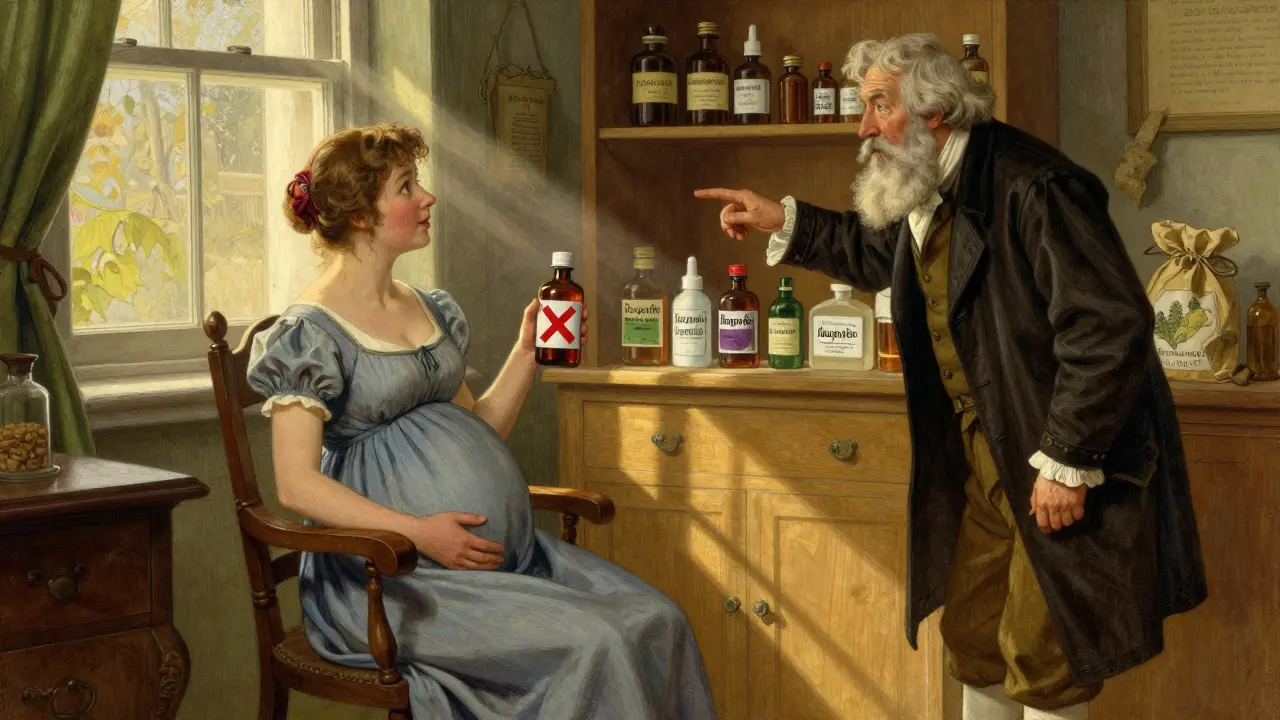
When you're pregnant, every pill, drop, or patch feels like a decision that could change your baby’s life. You’re not just thinking about yourself anymore. That headache you’ve had for three days? The stuffy nose? The back pain? You want relief-but you also want to protect your baby. And that’s where things get complicated.
What Medications Are Actually Dangerous During Pregnancy?
Not all drugs are created equal when you’re carrying a child. Some are fine. Others? They can cause serious, lifelong harm. The biggest red flags come from drugs that cross the placenta and interfere with how your baby’s organs develop-especially in the first trimester. NSAIDs like ibuprofen (Advil, Motrin) and naproxen (Aleve) are common pain relievers, but they’re off-limits after 20 weeks of pregnancy. Why? They can shut down your baby’s kidney function, leading to low amniotic fluid (oligohydramnios), which can cause lung underdevelopment and limb contractures. The FDA issued a formal warning in 2020 after multiple studies showed a 1.5 to 2 times higher risk of these complications. Even aspirin, unless you’re on a low dose (60-150 mg) for preeclampsia prevention, should be avoided. Then there’s isotretinoin (Accutane), the acne drug. It’s one of the most dangerous medications you can take while pregnant. More than 25% of babies exposed to isotretinoin in the first trimester develop severe birth defects-missing parts of the skull, heart problems, brain malformations. The FDA’s iPLEDGE program requires strict controls for this drug, and women are told to wait at least one month after stopping it before trying to conceive. ACE inhibitors and ARBs (like lisinopril, valsartan), used for high blood pressure, are also a hard no. These drugs can cause fetal kidney failure, low amniotic fluid, and even death. If you’re on one and find out you’re pregnant, stop immediately and call your doctor. There are safer alternatives like methyldopa or labetalol. Tetracycline antibiotics (doxycycline) stain developing teeth and weaken bones. Fluoroquinolones (ciprofloxacin, levofloxacin) are linked to a nearly 2-fold higher risk of joint and muscle problems in babies. Even valproic acid, used for epilepsy and bipolar disorder, carries a 10.7% risk of major birth defects-like spina bifida or cleft palate-compared to just 2.8% in the general population.The Acetaminophen Controversy: Safe or Not?
For decades, acetaminophen (Tylenol) was the go-to for fever and pain during pregnancy. But things changed in 2021. A massive study of 95,000 mother-child pairs in JAMA Pediatrics found a 28.6% higher risk of ADHD and a 20.4% higher risk of autism spectrum disorder in children whose mothers took acetaminophen for long periods during pregnancy. The FDA responded in September 2025 with a formal notice to physicians: Minimize use, especially for routine low-grade fevers. This created confusion. The American College of Obstetricians and Gynecologists (ACOG) still lists acetaminophen as the preferred option. But the CDC now says pregnant women should consider avoiding it as a precaution-even though no direct cause-and-effect has been proven. So what do you do? If you have a fever over 102°F, don’t wait. High body temperature increases the risk of neural tube defects by 8.2 times. In that case, acetaminophen is the safer choice. But if you’re taking it daily for back pain or headaches? That’s a different story. Use the lowest dose possible (325-650 mg), for the shortest time. Don’t exceed 3,000 mg a day. And talk to your provider about non-drug options.Safe Alternatives for Common Pregnancy Complaints
You don’t have to suffer. There are safer ways to manage everyday issues during pregnancy.- Pain and fever: Acetaminophen is still the best option-when used wisely. Try heat packs, massage, or prenatal yoga for back pain.
- Allergies: Loratadine (Claritin), cetirizine (Zyrtec), and fexofenadine (Allegra) are all Category B, meaning they’ve been studied in hundreds of pregnant women with no increased risk of birth defects. Avoid first-gen antihistamines like diphenhydramine (Benadryl) for long-term use-they can cause drowsiness and may affect fetal movement.
- Congestion: Saline nasal sprays are your first line of defense. If you need more, pseudoephedrine (Sudafed) is okay after the first trimester, but only at 30-60 mg every 4-6 hours, max 120 mg daily. Watch your blood pressure-it can spike by 5-10 mmHg.
- Constipation: Eat more fiber (25-30 grams daily), drink water, and move your body. If that doesn’t help, docusate sodium (Colace) or polyethylene glycol (Miralax) are both Category B and safe for long-term use. Avoid stimulant laxatives like senna.
- Heartburn: Eat smaller meals, avoid spicy or fatty foods, and don’t lie down right after eating. Calcium-based antacids (Tums) are safe. Avoid those with aluminum or magnesium in high doses.

What About Antidepressants?
This is one of the hardest calls. Untreated depression during pregnancy raises the risk of preterm birth by 64% and low birth weight by 73%. But some antidepressants carry risks too. Paroxetine (Paxil) is linked to a slightly higher chance of heart defects-1.5-2% compared to 0.7% baseline. SSRIs as a group may increase the risk of persistent pulmonary hypertension of the newborn (PPHN), from 1-2 per 1,000 births to 5-6 per 1,000. But here’s the key: if you stop your meds, you have a 20-25% chance of relapse. The decision isn’t about whether antidepressants are “safe.” It’s about whether staying well is safer than going unwell. Work with a psychiatrist and your OB. Never stop cold turkey. Tapering under supervision is critical.Chronic Conditions: Planning Ahead
If you have epilepsy, diabetes, high blood pressure, or autoimmune disease, your medication plan should start before you get pregnant. Women on valproate for seizures should switch to lamotrigine or levetiracetam before conception. Valproate’s 10.7% defect rate drops to 2.2% with lamotrigine. Warfarin (Coumadin) must be replaced with low molecular weight heparin (like Lovenox) because it crosses the placenta. Heparin doesn’t. Diabetes? Tight control before and during pregnancy reduces the risk of birth defects by up to 70%. Talk to your endocrinologist about insulin regimens and continuous glucose monitors.
What Should You Do Right Now?
If you’re pregnant or trying to conceive:- Make a full list of everything you take-prescription, OTC, supplements, herbal teas.
- Bring it to your next appointment. Don’t assume your doctor knows what you’re taking.
- Use trusted resources like MotherToBaby (operated by OTIS). They offer free, science-based advice and have answered over 2.3 million calls annually.
- Check the FDA’s Pregnancy and Lactation Labeling Rule (PLLR) for any drug you’re unsure about. The old A, B, C, D, X categories are gone. Now you get real narratives about risks.
- Don’t panic if you took something risky before you knew you were pregnant. Most exposures don’t cause harm. But get checked.
The Bigger Picture
There’s a growing gap between what doctors know and what pregnant women are told. A 2017 study found 60% of OB-GYNs didn’t know NSAIDs were unsafe after 20 weeks. Meanwhile, lawsuits are mounting against acetaminophen manufacturers-over 100 as of late 2023-claiming they didn’t warn about neurodevelopmental risks. The good news? Research is moving fast. The NIH is funding $15 million to find non-opioid pain options for pregnant women. The ABC Study, tracking 50,000 pregnant women across 15 countries, will give us clearer answers on acetaminophen by 2026. For now, your best tool is awareness. Know what’s risky. Know what’s safe. Know when to ask for help. And remember: the goal isn’t perfection. It’s making informed choices that protect both you and your baby.Is it safe to take Tylenol while pregnant?
Acetaminophen (Tylenol) is still considered the safest pain reliever during pregnancy when used at the lowest effective dose for the shortest time. However, new research suggests long-term or frequent use may be linked to a higher risk of ADHD and autism in children. The FDA now advises minimizing use, especially for minor symptoms like low-grade fevers. If you have a fever over 102°F, taking acetaminophen is safer than leaving it untreated.
Can I take ibuprofen during pregnancy?
No, ibuprofen and other NSAIDs like naproxen should be avoided after 20 weeks of pregnancy. They can cause fetal kidney problems and dangerously low amniotic fluid levels. Even before 20 weeks, they’re not recommended unless prescribed for a specific medical reason. Use acetaminophen instead for pain or fever.
What allergy meds are safe during pregnancy?
Second-generation antihistamines like loratadine (Claritin), cetirizine (Zyrtec), and fexofenadine (Allegra) are considered safe during pregnancy. They’ve been studied in over 2,000 pregnancies with no increased risk of birth defects. Avoid first-generation options like Benadryl for regular use due to drowsiness and potential effects on fetal movement.
Are antidepressants safe if I’m pregnant?
Some antidepressants carry small risks, but untreated depression poses greater dangers-like preterm birth and low birth weight. Paroxetine is linked to a slightly higher risk of heart defects. SSRIs may slightly increase the risk of PPHN. But stopping medication increases relapse risk by 20-25%. Work with your doctor to weigh risks and benefits. Never stop abruptly.
What should I do if I took a risky medication before knowing I was pregnant?
Don’t panic. Most exposures don’t lead to birth defects. Call MotherToBaby (1-866-626-6847) or your OB-GYN. They can assess the timing, dosage, and drug involved. Many medications are safe in early pregnancy before organ development begins. Your provider may recommend an early ultrasound or genetic counseling if needed.
Is it safe to use herbal supplements during pregnancy?
Many herbal supplements aren’t tested for safety in pregnancy. Some, like black cohosh, goldenseal, or dong quai, can trigger contractions or affect fetal development. Even “natural” doesn’t mean safe. Always check with your provider before taking any supplement, tea, or remedy.


Write a comment