

Antidepressant Efficacy & Side Effect Tracker
Track Your Progress
Monitor both mood improvement and side effects to help your doctor optimize treatment
Common Side Effects
Your Progress Summary
Track your entries to see patterns in efficacy and side effects
Current mood trend: No data yet
Based on your last 7 entries
Your data can help guide treatment decisions. Discuss your results with your doctor at your next appointment.
When you start taking an antidepressant, you’re hoping for one thing: to feel better. But too often, the path isn’t straightforward. You might notice your mood lifting a little, but then you’re battling dry mouth, insomnia, or loss of libido. Or maybe nothing changes at all. The truth is, antidepressant efficacy and side effect burden don’t always move in sync. What helps your depression might be making other parts of your life harder. That’s why tracking both-not just one-isn’t optional. It’s essential.
Why Tracking Both Matters More Than You Think
Most people assume if they’re taking their pill every day, their doctor knows how it’s going. But studies show otherwise. A 2022 survey by the National Alliance on Mental Illness found that 74% of antidepressant users experienced side effects, yet only 39% felt their provider actually addressed them. Meanwhile, 68% of Reddit users on r/mentalhealth reported their psychiatrist never used a formal scale to measure progress. That’s not negligence-it’s a system gap. Here’s the hard truth: about 30-40% of people don’t respond to their first antidepressant. And nearly three out of four experience at least one side effect. If you’re not measuring both sides-how much your mood improves and how much your daily life gets disrupted-you’re flying blind. The goal isn’t just to reduce sadness. It’s to help you sleep, work, connect, and enjoy life again. That requires data, not just gut feelings.How Clinicians Measure Efficacy (And What You Should Know)
Doctors don’t guess how you’re doing. They use tools. Three are most common:- PHQ-9: Nine questions, scored 0-27. A score below 5 means you’re likely in remission. Over 15? You’re still in moderate to severe depression.
- BDI (Beck Depression Inventory): 21 questions. A score above 29 signals severe depression. A 50% drop from baseline? That’s a strong sign the medication is working.
- HDRS: A longer 17- to 30-item scale used mostly in clinics. Scores under 7 mean remission.
Side Effects: The Hidden Cost of Treatment
Antidepressants don’t just lift mood. They affect your whole body. The Antidepressant Side-Effect Checklist (ASEC) tracks 15 common issues: nausea, dizziness, weight gain, sexual dysfunction, tremors, and more. Each is rated 0-4 for severity. Sexual side effects? They’re the #1 reason people quit SSRIs. One 2022 study found 61% of users stopped their meds because they weren’t given help managing this. And it’s not just about how bad it feels. It’s about how long it lasts. Some side effects fade in weeks. Others stick around. Weight gain? It can creep in over months. Insomnia? It might not show up until you’ve been on the drug for six weeks. That’s why tracking isn’t a one-time thing. You need to watch for changes over time.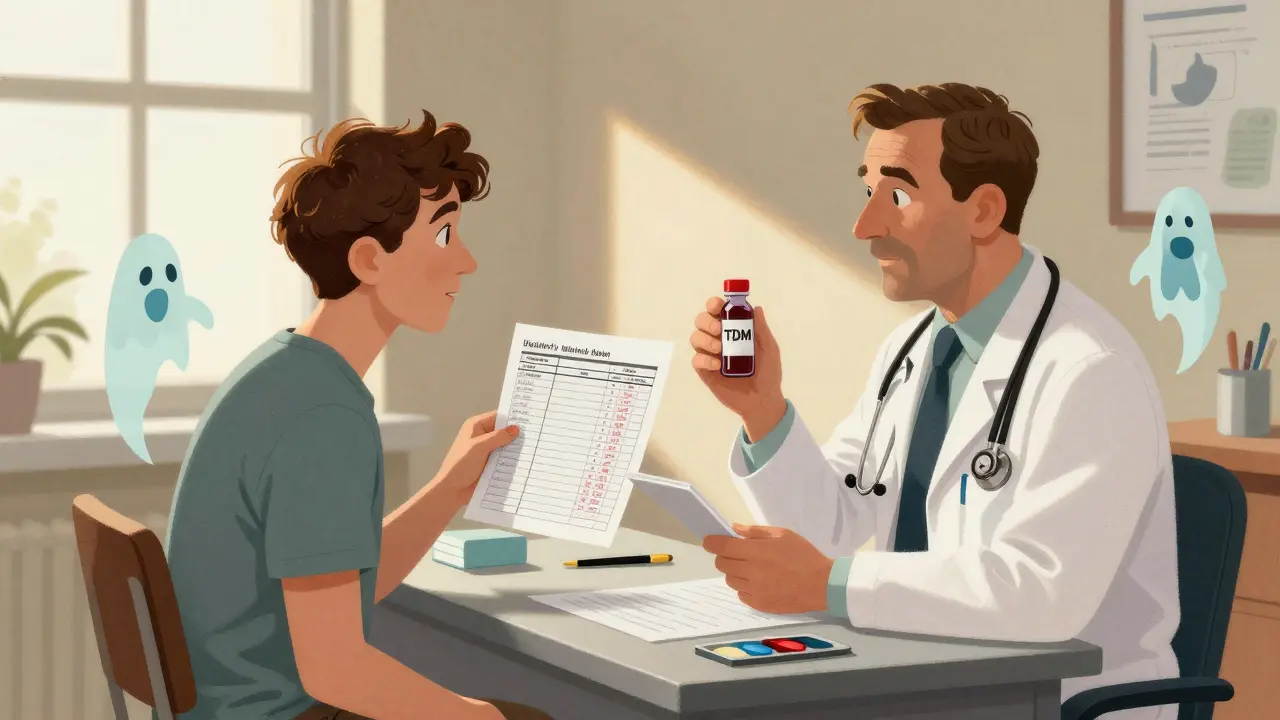
What You Can Do: Simple Patient Strategies
You don’t need to be a doctor to track your progress. Here’s how real people are making it work:- Track your mood daily. Use a 1-10 scale. Not ‘I feel okay’-but ‘Today I scored a 3. I cried at work.’ Write it down. Apps like Moodfit and Sanvello help, but even a notebook works.
- Log side effects weekly. Did you have trouble sleeping? Headaches? Low libido? Note it. Over time, patterns emerge. Maybe your nausea only happens after dinner. Maybe your energy spikes after two weeks.
- Set specific goals. Don’t say ‘I want to feel better.’ Say: ‘I want to take the bus to work three days a week,’ or ‘I want to talk to my sister without zoning out.’ These are measurable. And they’re more meaningful than a score on a scale.
- Bring your logs to appointments. Don’t wait for your doctor to ask. Show them your notes. Say: ‘Here’s what’s changed. Here’s what’s still hard.’ It changes the conversation.
Therapeutic Drug Monitoring: The Hidden Tool
You might not know this, but your blood can tell your doctor if you’re getting the right dose. Therapeutic Drug Monitoring (TDM) measures how much of the drug is in your system. Why? Because people metabolize antidepressants differently. Two people on the same dose can have totally different blood levels. A 2022 meta-analysis found 50-70% of people who don’t respond to antidepressants actually have subtherapeutic drug levels-even if they’re taking their pills perfectly. TDM uses a tiny blood sample (as small as 20μL) and advanced lab tech to measure levels of SSRIs, SNRIs, and more. It’s accurate, but it’s not widely used. Only 8-12% of prescriptions include it, even though guidelines say it should be used for 35% of cases. If you’ve been on the same dose for months with no change, ask: ‘Has my drug level been checked?’ It’s not expensive-around $50-$150 per test. And it can save you months of guessing.When Numbers Lie: The Limits of Scales
Don’t get fooled into thinking a number tells the whole story. A 2020 study from Harvard warned that over-relying on scales can miss real progress. Some people feel more alive, more connected, or more able to cope-even if their PHQ-9 score barely budges. Functional recovery can come before symptom reduction. That’s why your doctor should ask: ‘What’s something you’re doing now that you couldn’t do before?’ Maybe you took a shower. Maybe you called a friend. Maybe you didn’t cancel plans. Those things matter. A score can’t capture that.
What’s Changing Now
The rules are shifting. In January 2024, the FDA cleared the first digital therapeutic (Rejoyn) that requires weekly PHQ-9 tracking. The American Psychiatric Association updated its guidelines in June 2024 to mandate systematic monitoring of both efficacy and side effects at every stage of treatment. Digital tools are growing fast. Moodfit, Sanvello, and others are integrating with EHRs. AI is even starting to predict non-response by analyzing clinical notes. A 2023 Nature Mental Health study got 78% accuracy just from speech patterns in doctor visits. But here’s the reality: technology doesn’t replace the patient’s voice. It amplifies it. The best outcomes happen when you’re armed with data, and your doctor listens.What to Ask Your Doctor
If you’re on an antidepressant, here are five questions to ask at your next visit:- Have you used a validated scale like PHQ-9 or BDI to track my progress?
- What side effects should I expect, and which ones mean I should call you?
- Has my blood level been checked? Could it help if we did?
- What’s one small goal we can track this month?
- What happens if I don’t see improvement by week 6?
Final Thought: Progress Isn’t Always Loud
You might not wake up one day feeling ‘cured.’ But you might notice you’re laughing at a TV show again. Or you’re not dreading Monday anymore. Or you’re finally able to hold a conversation without feeling like you’re underwater. That’s progress. And it’s worth tracking. Not because a scale says so. But because you deserve to know if the medicine is helping-or just making things harder.How long should I wait before deciding if my antidepressant is working?
Most antidepressants take 4-6 weeks to show noticeable effects, and full benefit often takes 8-12 weeks. A 50% reduction in symptoms by week 6 is a strong sign the medication is working. If there’s no improvement by then, your doctor should consider adjusting the dose or switching medications. Waiting longer than 12 weeks without progress increases the risk of prolonged suffering and side effect burden.
Can I track my mood without an app?
Absolutely. A simple notebook or printed PHQ-9 form works just as well. Many people find writing by hand helps them reflect more deeply. Track your mood daily on a 1-10 scale, note side effects weekly, and bring it to appointments. The key isn’t the tool-it’s consistency. A 2021 JAMA Network Open study showed patients who tracked their mood, even manually, reported 43% greater treatment satisfaction.
Are side effects always temporary?
No. Some side effects like nausea or dizziness fade within days or weeks. Others-like weight gain, sexual dysfunction, or emotional blunting-can persist. If a side effect lasts more than 6-8 weeks and impacts your quality of life, it’s not something you should just ‘tough out.’ Talk to your doctor about dose changes, switching medications, or adding treatments like cognitive behavioral therapy to manage it.
Why isn’t therapeutic drug monitoring used more often?
Cost and access are the biggest barriers. TDM requires specialized lab equipment and trained personnel. A single test costs $50-$150, and labs need CLIA certification. Many primary care offices don’t have the infrastructure. Also, there’s a cultural habit of prescribing ‘by feel.’ But evidence shows TDM improves outcomes: a 2022 meta-analysis found it increased remission rates by 25-35%. As digital health tools expand, TDM is likely to become more common, especially for treatment-resistant cases.
What if my doctor says I’m ‘just being sensitive’ to side effects?
That’s not acceptable. Side effects are real, measurable, and validated. If your provider dismisses your concerns, ask for a referral to a psychiatrist or a specialist in mood disorders. You can also bring printed data: the ASEC checklist, your symptom log, or even the 2023 WFSBP consensus guidelines that state side effect management is a core part of treatment. Your experience matters. You have the right to be heard-and to have your symptoms taken seriously.


Write a comment