
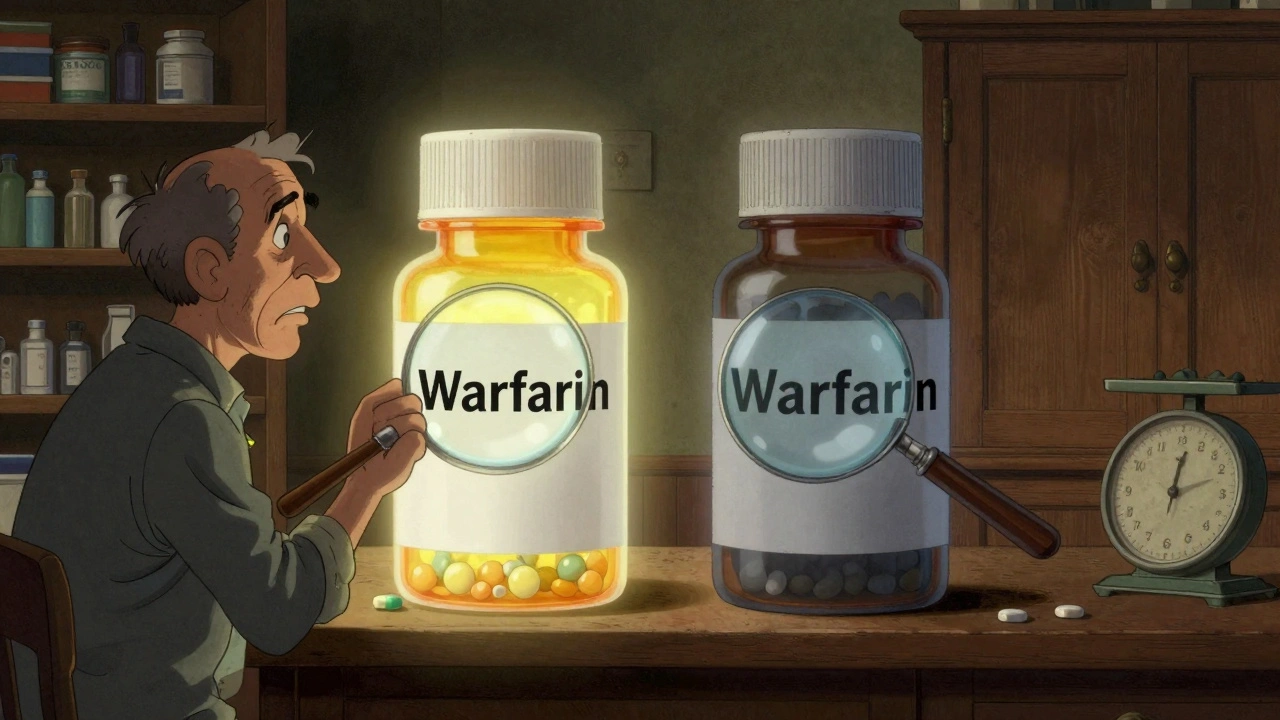
When you take a medication like warfarin, levothyroxine, or lithium, even a tiny change in your dose can mean the difference between treatment working and something going seriously wrong. These are NTI drugs - narrow therapeutic index medications. They don’t give you much room for error. A little too much, and you risk toxicity. A little too little, and the drug doesn’t work. That’s why switching between different generic versions of these drugs isn’t just a routine pharmacy decision - it’s a high-stakes move.
What Makes a Drug an NTI Drug?
NTI stands for narrow therapeutic index. That means the gap between a safe, effective dose and a dangerous one is razor-thin. For example, digoxin has a therapeutic index of about 2 - meaning the toxic dose is only twice the effective dose. Warfarin? Around 2 to 4. Lithium? Just 2 to 2.7. Compare that to antibiotics or blood pressure meds, where the safe range is much wider. With NTI drugs, small changes in blood levels can trigger side effects like seizures, organ rejection, or dangerous bleeding.
The U.S. Food and Drug Administration (FDA) doesn’t publish a full list of NTI drugs, but it’s clear which ones matter most. These include:
- Warfarin (Coumadin)
- Levothyroxine (Synthroid)
- Carbamazepine (Tegretol)
- Phenytoin (Dilantin)
- Digoxin (Lanoxin)
- Lithium carbonate (Lithobid)
- Cyclosporine (Neoral, Gengraf)
- Tacrolimus (Prograf)
- Theophylline
- Valproic acid
These drugs are used for conditions where stability is everything - heart rhythm, thyroid function, seizure control, organ transplants, mood disorders. If your blood level of tacrolimus drops 10%, your body might reject a new kidney. If your lithium level creeps up, you could develop tremors, confusion, or kidney damage.
Why Generic Switching Gets Complicated
All generic drugs must meet FDA standards for bioequivalence. That means they must deliver the same amount of active ingredient into your bloodstream as the brand-name version - within a certain range. For most drugs, that range is 80% to 125% of the brand’s levels. But for NTI drugs, the FDA tightened those rules. Since 2018, bioequivalence limits for many NTI drugs have been narrowed to 90% to 111%, and in some cases, even tighter - 95% to 105% for the active ingredient’s potency.
That sounds reassuring, right? But here’s the catch: bioequivalence is measured across a group of healthy volunteers. It doesn’t guarantee that every single patient will react the same way when switching between different generic manufacturers.
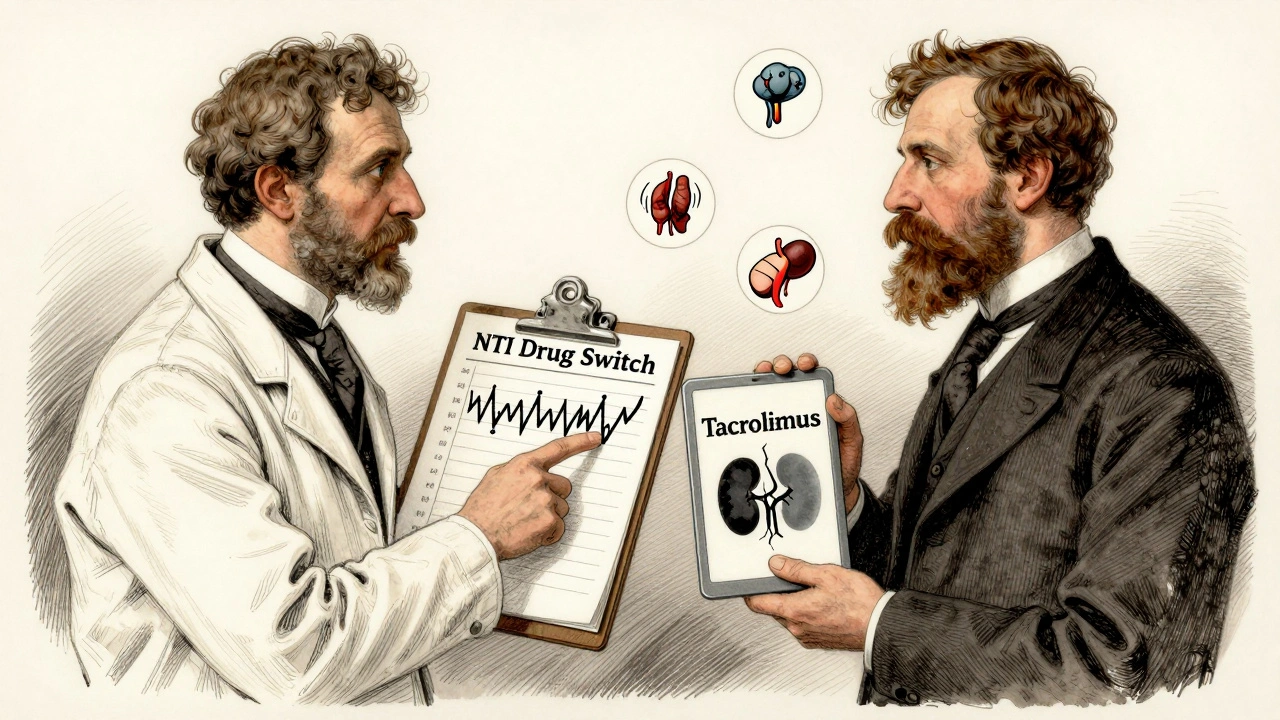
A 2019 study on tacrolimus looked at four generic versions and compared them to the brand. The average potency ranged from 93% to 110%. That’s still within FDA limits. But one version was 110% - nearly 10% higher than the brand. In a patient with a kidney transplant, that small difference could push their blood level into the toxic range. Another version was 93% - almost 7% lower. That could trigger rejection.
Real-world data backs this up. A 2015 study of kidney transplant patients found a 21.9% coefficient of variation in tacrolimus blood levels after switching between generic manufacturers. That’s a huge swing - enough to cause acute rejection in some patients. Cyclosporine showed a 15.3% higher rejection rate when switching from Neoral to Gengraf, even though both are the same active ingredient.
What the Data Really Shows
The FDA says generic NTI drugs are therapeutically equivalent. And for many patients, that’s true. A 2021 FDA analysis of over 10,000 patients on levothyroxine found no meaningful difference in TSH levels between brand-name Synthroid and generics. The average TSH was 2.12 vs. 2.15 - statistically identical. For most people, switching generics doesn’t cause problems.
But that’s an average. Some patients aren’t average. A 2019 survey of pharmacists found that 63% had received complaints from patients or doctors after switching between generic manufacturers of NTI drugs. Patients reported new tremors, mood swings, seizures, or unexplained changes in lab values. These aren’t rare anecdotes. They’re real experiences.
And it’s not just about the active ingredient. The fillers, coatings, and manufacturing processes can vary between companies. One generic might dissolve faster in the stomach. Another might be absorbed differently in the gut. For NTI drugs, those tiny differences can add up.
Doctors, Pharmacists, and the Law
Pharmacists are trained to substitute generics to save money. But when it comes to NTI drugs, many are cautious. In 27 states, laws restrict or prohibit automatic substitution of NTI drugs without the prescriber’s permission. In those states, pharmacists can’t switch your levothyroxine or carbamazepine without calling your doctor first.
Why? Because the stakes are too high. A 2019 national survey showed that 82% of pharmacists routinely substituted generics for initial prescriptions - but only 58% felt comfortable doing it for NTI drugs. Nearly half said they’d rather not switch unless absolutely necessary.
Some medical groups agree. The American Academy of Neurology advises against automatic substitution of antiepileptic NTI drugs like phenytoin and carbamazepine. They’ve seen patients with stable seizure control suddenly have breakthrough seizures after a generic switch. The Epilepsy Foundation has collected dozens of such cases.
Meanwhile, the American Medical Association points out a contradiction: if generic switching is risky, then why aren’t we worried about brand-name manufacturers changing their own formulations? They do - and often. The AMA’s 2007 report noted that brand-name companies change their pills’ ingredients and coatings “not an infrequent occurrence.” If those changes don’t trigger chaos, why should generic switches?

What Patients Should Do
If you take an NTI drug, here’s what you need to know:
- Know your drug. Is it on the NTI list? If you’re on warfarin, lithium, levothyroxine, or an antiseizure med, assume it is.
- Ask your pharmacist. If your prescription is filled with a different generic than before, ask if it’s a different manufacturer. Don’t assume it’s the same.
- Monitor your symptoms. Do you feel different? Any new dizziness, fatigue, tremors, mood changes, or unusual symptoms? Don’t brush them off. These could be signs your drug level shifted.
- Get lab tests. For drugs like warfarin, lithium, or tacrolimus, regular blood tests are essential. If you switch generics, ask your doctor to check your levels within 2-4 weeks.
- Request consistency. Tell your doctor you want to stay on the same generic version - or the brand - if possible. Many doctors will write “Dispense as written” or “Do not substitute” on the prescription.
Some patients find it easier to stick with the brand-name version - especially if insurance covers it. For others, generics are the only affordable option. There’s no one-size-fits-all answer. But you have the right to ask questions and demand stability.
The Bigger Picture
The push for generic drugs is about cost savings - and that’s a good thing. Generic medications save the U.S. healthcare system billions each year. But with NTI drugs, we can’t treat them like ordinary pills. They need special handling.
The FDA is aware. Their 2022 guidance emphasized stricter testing for NTI drugs and ongoing post-market monitoring. But the system still relies on population-level data. It doesn’t always catch individual vulnerabilities.
For now, the best protection is awareness. If you’re on an NTI drug, don’t let a pharmacy switch your pills without your knowledge. Your health depends on consistency - not just the active ingredient, but the exact formulation that keeps your body in balance.
There’s no perfect solution. But knowing the risks, asking the right questions, and staying involved in your care can make all the difference.


Write a comment