

When a doctor prescribes a generic medication, many assume it’s a simple step-cheap, effective, and automatically covered. But for providers, that’s rarely the case. Even for generics, prior authorization is now a routine hurdle. It’s not about blocking access-it’s about navigating a maze of rules set by insurers, pharmacy benefit managers (PBMs), and government programs. And the stakes are high: patients go without meds, practices lose time, and delays can worsen health outcomes.
Why Do Generics Need Prior Authorization?
You might wonder: if generics are cheaper, why do insurers still require approval? The answer isn’t about cost-it’s about control. Insurers don’t just want to limit expensive brand-name drugs; they also want to steer patients toward specific generic versions they’ve negotiated lower prices for. If a patient needs omeprazole, the plan might only cover the version made by Teva, not the one made by Mylan-even though both are chemically identical. That’s called a preferred drug list (PDL). When a provider picks a non-preferred generic, prior authorization kicks in. Quantity and duration limits are other common triggers. A 30-day supply of metformin? No problem. A 90-day supply? That requires approval. Same with proton pump inhibitors: most guidelines say eight weeks is enough for healing ulcers, but patients with Barrett’s esophagus may need it longer. Without documentation, the claim gets denied. According to the Academy of Managed Care Pharmacy, 28% of all prior authorization requests involve generic medications. Most aren’t about safety-they’re about formulary compliance. And while brand-name drugs often face longer delays, generics aren’t immune. In fact, denials for generics are often due to paperwork errors, not medical inappropriateness.The Step-by-Step Process for Getting Approval
Securing approval isn’t guesswork. It’s a system with clear, if frustrating, steps. First, the provider must determine if the prescribed generic is on the payer’s formulary and whether any restrictions apply. Most electronic health record (EHR) systems now flag these upfront. If a restriction exists, the next step is gathering clinical documentation. This isn’t just a note saying “patient needs it.” It needs specifics: lab results, diagnostic reports, prior treatment failures, or documented side effects. For example, if a patient had severe diarrhea on metformin and needs sitagliptin instead, the provider must show the adverse reaction was documented in the chart. Then comes submission. Over 78% of commercial insurers and 63% of Medicare Part D plans now require electronic submission through platforms like CoverMyMeds or Surescripts. Fax is still used by 22%, but it’s slow and error-prone. Phone requests? Only 5%-and they’re usually for urgent cases. Once submitted, the clock starts. Medicaid mandates a 24-hour turnaround for urgent requests and 14 days for standard ones. Commercial insurers typically take 5-10 business days. But here’s the kicker: if the request meets all automated criteria-correct quantity, no red flags, matching documentation-it can be auto-approved in minutes. Judi Health reports 41% of generic prior authorizations are auto-approved when documentation is complete.What Makes Approval Easier (and Faster)?
There’s a big difference between providers who get approvals quickly and those who wait weeks. The difference? Strategy. Practices that succeed have standardized templates. Instead of writing a new note each time, they use pre-filled forms for common scenarios: “Patient intolerant to Formulary Generic A due to nausea and vomiting, documented on 01/15/2024,” or “Chronic use of PPI beyond 8 weeks due to Barrett’s esophagus confirmed by endoscopy on 12/03/2023.” Capital Rx found that providers using these templates saw approval times drop by 32%. They also assign tasks. Medical assistants handle 78% of routine prior authorization requests under physician supervision. That frees up doctors to focus on care instead of paperwork. And they maintain payer-specific checklists. One insurer might require a signed letter from the provider. Another might need a copy of the last prescription. Keeping these in a digital folder saves hours. Building relationships with payer representatives helps too. A quick call to a customer service rep who knows your practice can cut through red tape faster than a dozen emails.
How Insurance Types Differ
Not all plans are created equal. Medicaid, Medicare Part D, and commercial insurers all have different rules. Medicaid fee-for-service requires prior authorization for 67% of select generics, mostly based on PDLs. Medicare Part D? 89%. Commercial insurers? A staggering 93%. That means if you’re seeing patients across multiple insurance types, you’re dealing with three different rulebooks. Medicare Advantage plans, under the 2023 Improving Seniors’ Timely Access to Care Act, must now respond to urgent requests within 24 hours and standard ones within 72 hours-effective January 1, 2024. That’s a big win. But commercial insurers still often take a full week or more. The worst offenders? PBMs that restrict which generic manufacturer’s product they cover. If your patient has been on Mylan’s generic lisinopril for years and you switch to Teva’s version because it’s cheaper, some plans will deny it unless you prove the patient had a reaction to the original. That’s not clinical logic-it’s contract negotiation.Why Denials Happen (And How to Fight Them)
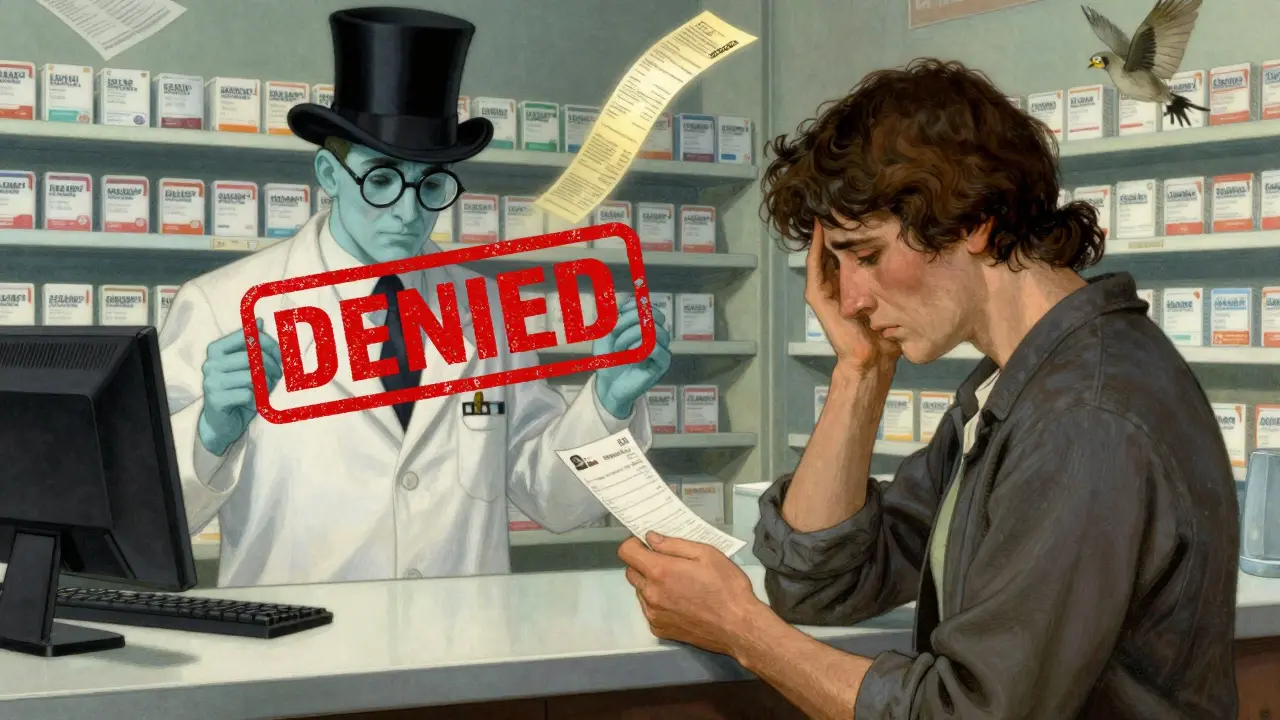
The AMA reports that 18.7% of prior authorization requests for generics are denied. The top three reasons?- Lack of required documentation (42%)
- Failure to demonstrate medical necessity (38%)
- Failure to try the preferred alternative (20%)


Write a comment