
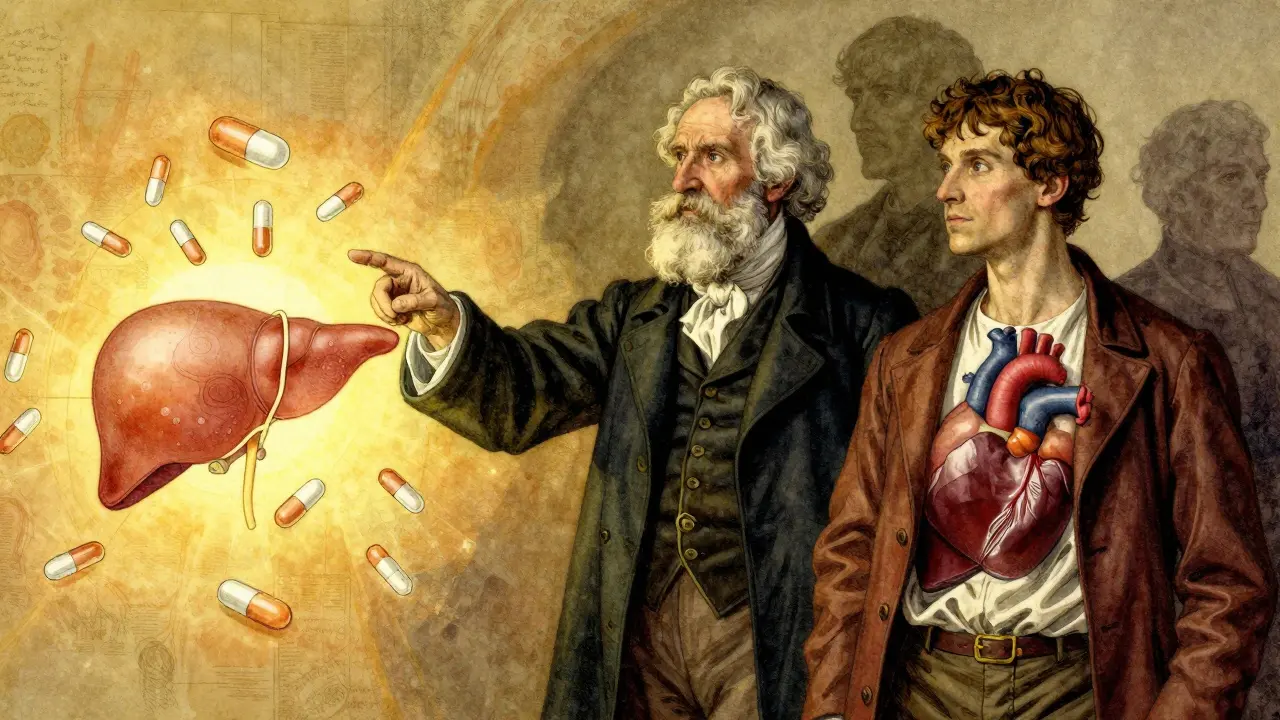
For years, doctors avoided prescribing statins to patients with liver disease. The fear was simple: statins are processed by the liver, so wouldn’t they make liver damage worse? It made sense on the surface. But the science has changed - dramatically. Today, we know statins don’t just safe for people with chronic liver disease; they may actually protect the liver and save lives.
Why Statins Were Once Avoided
Statins, like atorvastatin, rosuvastatin, and simvastatin, were developed to lower LDL cholesterol - the kind that clogs arteries and leads to heart attacks and strokes. But early warnings on their labels said to avoid them in patients with liver disease. That wasn’t based on strong evidence. It was precautionary. Back then, doctors saw mild rises in liver enzymes (ALT, AST) in some patients and assumed the drug was harming the liver. In reality, those small spikes are usually harmless and temporary. They don’t mean the liver is getting worse.The truth? Severe liver injury from statins happens in about 1 out of every 100,000 people per year. That’s rarer than being struck by lightning. And when it does happen, it’s not because the drug is toxic to the liver - it’s an unpredictable, rare immune reaction. Not a side effect you can predict or prevent with routine blood tests.
Statins and the Liver: What the Science Actually Shows
Multiple large studies have now looked at this directly. The JUPITER trial, which followed 18,000 people for two years, found no difference in liver problems between those taking rosuvastatin and those taking a placebo. The EXCEL trial with 8,000 patients on lovastatin saw zero cases of hepatitis. These aren’t small studies. These are massive, rigorous trials.Even in patients with cirrhosis - the most advanced stage of liver disease - statins haven’t been shown to make things worse. In fact, they’ve been shown to help. One study gave 40 mg of simvastatin to 30 patients with cirrhosis. Within 30 minutes, their liver blood flow increased by 20%, and pressure in the liver’s blood vessels dropped by 14%. That’s not a coincidence. Statins help relax blood vessels, reduce inflammation, and improve how the liver handles blood flow. In cirrhosis, high pressure in the liver’s blood vessels leads to dangerous bleeding and fluid buildup. Statins reduce that risk.
A 2023 study in Gastroenterology Research found that patients with compensated cirrhosis who took statins had:
- 22% lower risk of liver decompensation (when the liver suddenly fails to function)
- 38% lower risk of variceal bleeding (life-threatening bleeding from swollen veins in the esophagus)
- 26% lower risk of death
These aren’t small numbers. They’re life-changing.
How Statins Help Beyond Cholesterol
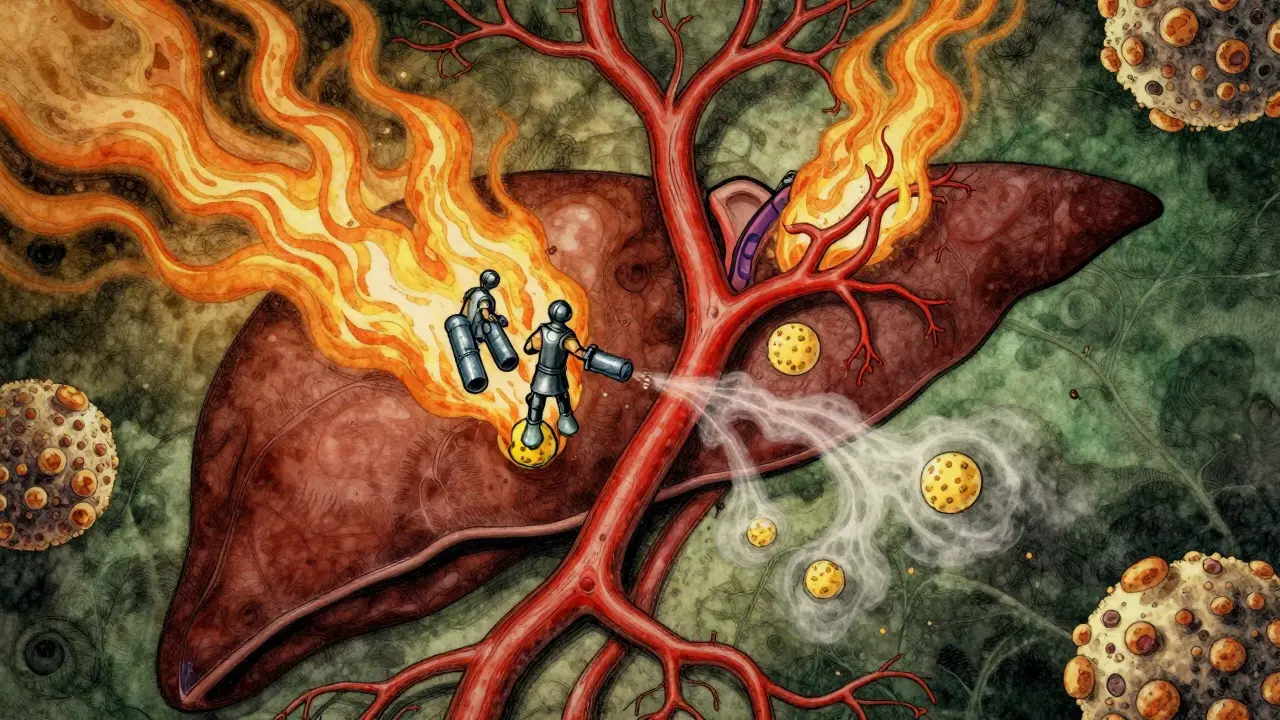
Most people think statins only lower cholesterol. That’s true - they reduce LDL by 25% to 60%, depending on the dose and type. But that’s not all they do. Statins have what’s called “pleiotropic effects.” That’s a fancy word for “other helpful actions.”They reduce inflammation in the body - lowering CRP (C-reactive protein), a marker of inflammation that’s linked to heart disease and liver damage. They improve how blood vessels work, making them more flexible and less likely to form clots. They even help the liver’s own blood vessels relax, which reduces pressure and prevents bleeding.
In patients with non-alcoholic fatty liver disease (NAFLD), statins have been shown to reduce fat buildup in the liver and lower liver enzyme levels. One patient on HealthUnlocked wrote: “My liver numbers actually improved on atorvastatin.” That’s not an outlier. Multiple studies confirm it.
Who Should Take Statins - and Who Shouldn’t
If you have chronic liver disease - whether it’s from alcohol, hepatitis, or fatty liver - and you also have high cholesterol or a history of heart disease, you should be on a statin. The American Heart Association, the European Association for the Study of the Liver, and the American Association for the Study of Liver Diseases all agree on this.Here’s who should consider them:
- Patients with NAFLD or NASH who have high LDL or a history of heart disease
- People with compensated cirrhosis (liver still working well enough)
- Anyone with chronic hepatitis B or C who has cardiovascular risk factors
- Patients with liver disease who’ve had a heart attack or stroke
Who should avoid them?
- People with active, severe liver disease - like acute hepatitis or liver failure
- Those with unexplained, persistently high liver enzymes (above 3x the normal limit) without a clear cause
- Patients with advanced cirrhosis (Child-Pugh Class C) should start with low doses and be monitored closely, but they can still benefit
Don’t let outdated labels scare you. The FDA’s warning about liver disease was written before modern evidence came in. Many experts now say it’s outdated.
Choosing the Right Statin for Liver Disease
Not all statins are the same when it comes to liver processing. Some rely heavily on liver enzymes (CYP3A4) to break them down. That’s a concern if you’re on other medications that interact with those enzymes.For liver disease patients, the best choices are:
- Rosuvastatin - mostly cleared by the kidneys, not the liver. Safe even with moderate liver impairment.
- Pravastatin - also cleared by the kidneys. Minimal liver metabolism.
- Fluvastatin - uses a different liver enzyme (CYP2C9), less likely to interact.
Avoid or use with caution:
- Simvastatin and lovastatin - heavily processed by CYP3A4. Higher risk of interactions with common drugs like antibiotics or antifungals.
- Atorvastatin - okay for most, but watch for interactions. Often used safely in liver disease at moderate doses.
Start low. For most patients with liver disease, begin with rosuvastatin 5-10 mg or pravastatin 20-40 mg. Recheck liver enzymes in 4-6 weeks. If they’re stable or lower, keep going. If they rise above 3x the upper limit - which is rare - pause and investigate. But don’t stop statins just because of a small, temporary spike.
What Patients Are Saying
Real people with liver disease are sharing their experiences online. On Reddit’s r/liverdisease, 84% of 58 cirrhosis patients on statins reported no liver-related side effects. On HealthUnlocked, 63% said they felt more energetic - likely because their heart was working better.One woman with NAFLD wrote: “My doctor refused to prescribe a statin because of my fatty liver. I pushed back. I got one. My cholesterol dropped. My ALT went from 80 to 40. I didn’t lose weight - the statin did that for me.”
Another man with compensated cirrhosis said: “After starting rosuvastatin, my portal hypertension symptoms decreased significantly. I used to get bloated and short of breath. Now, I walk without stopping.”
Most negative reports? Muscle aches. That’s common with statins, but it’s not liver-related. And it happens in healthy people too.

Why Doctors Still Hesitate
Despite all the evidence, many doctors still won’t prescribe statins to liver patients. Why? Because they learned the old rules. They remember the warnings on the label. They don’t know the latest studies.Research shows it takes 18 to 24 months for new guidelines to change how doctors prescribe. That’s a long time. And patients often have to advocate for themselves. One survey found that 31% of liver disease patients had to argue with their doctor to get a statin.
It’s not that doctors are wrong. They’re just behind the curve. The evidence is clear. The guidelines are updated. The risks are minimal. The benefits are real.
What to Do If You Have Liver Disease
If you have chronic liver disease and you’re over 40, or if you have high cholesterol, diabetes, high blood pressure, or a family history of heart disease - talk to your doctor about statins. Don’t wait for them to bring it up. Bring it up yourself.Ask:
- “Based on my liver condition, is a statin right for me?”
- “Which statin would be safest for my liver?”
- “Do I need regular liver tests while on it?”
And if your doctor says no - ask why. Is it because of new evidence? Or because of an old fear? Share the studies. Mention the American Heart Association and EASL guidelines. You’re not being pushy. You’re being informed.
Statins aren’t magic. But for people with liver disease, they’re one of the few medications that do more than just treat one problem - they protect your heart, your liver, and your life.
What’s Next
The STATIN-CIRRHOSIS trial, currently running, will give us the strongest evidence yet on statins in decompensated cirrhosis. Results are expected in late 2025. But even now, the data is overwhelming.Statins don’t cause liver damage. They help prevent it. They don’t increase risk - they reduce it. And for people with liver disease, that’s not just a medical fact. It’s a lifeline.


Write a comment